


The best formal outfit ideas for art events are not the most decorative ones. They are the outfits that hold their shape, respect the room, and feel intelligent without trying too hard. Art events reward restraint, strong silhouettes, and a sense of quiet authority. You should look considered, not over-styled.

HER.I is a modern occasionwear house based in New York, exploring clothing as an act of quiet power. Defined by deliberate restraint, sculptural softness, and silhouette memory, the collections are designed for meaningful settings — where clothing is chosen carefully, worn with intention, and remembered long after the moment has passed.
Our position: the right art-event outfit should read as cultured, not costume-like. From our experience, the most successful guests at gallery openings, museum dinners, auction previews, and private viewings wear one strong shape, one intentional texture, and one calm color story. That formula beats trend-chasing every time.
How to dress for formal art events
Formal art events have a specific energy. The room usually includes collectors, curators, artists, patrons, editors, and people who are very good at noticing details. That means your outfit needs to be refined enough for an elegant space, but not so literal that it distracts from the event itself. We recommend dressing with architecture, not ornamentation, in mind.
That is why formal outfit ideas for art events should lean into line, proportion, and finish. A sculpted shoulder can say more than sequins. A draped wrap can feel more expensive than a loud embellishment. A fitted tulip appliqué dress can hold the eye without turning the wearer into the exhibition.
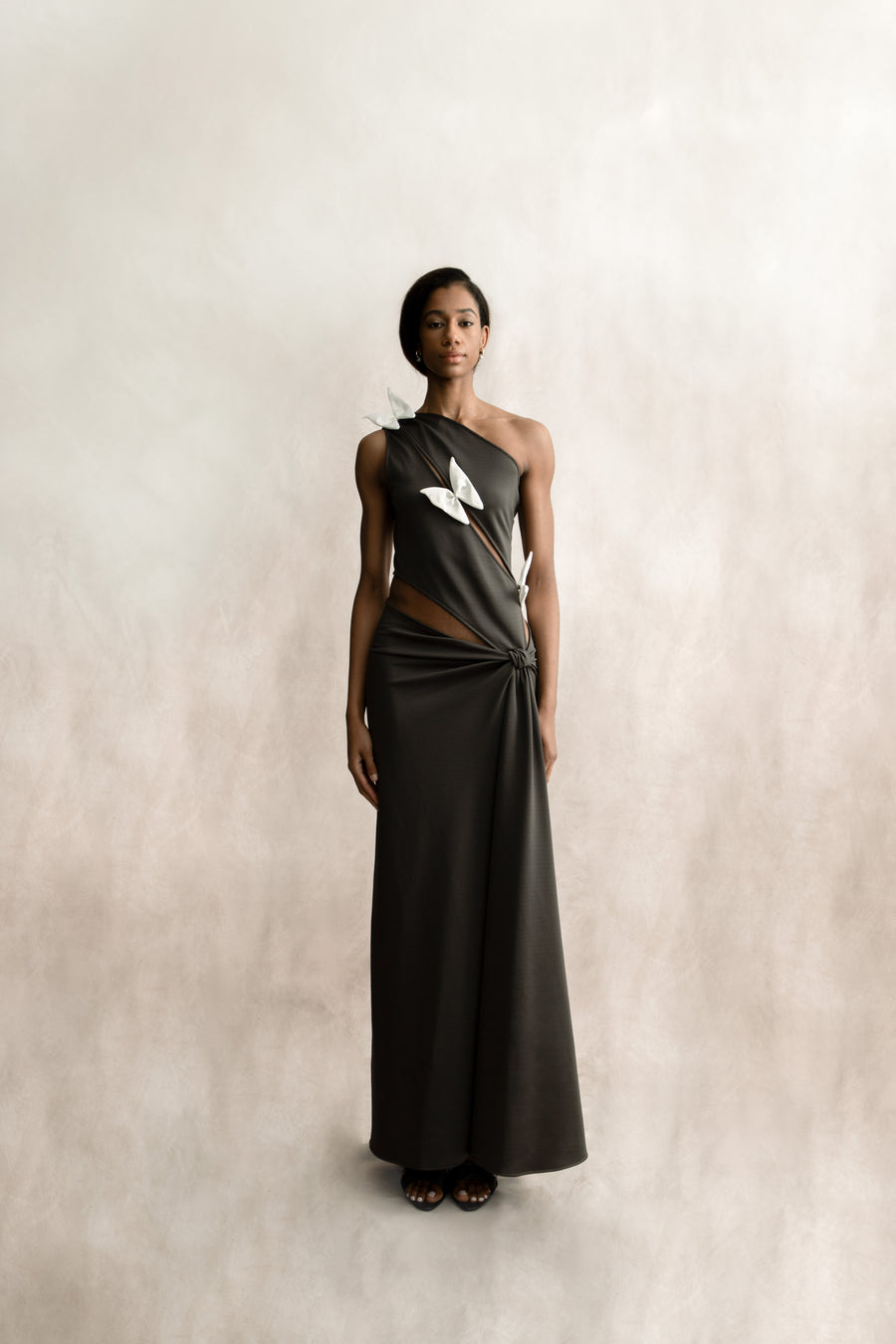
For buyers who want a starting point inside HER.I’s style language, the strongest reference pieces are the One-Shoulder Low-Rise Draped Dress - Graphite and the One-Shoulder Low-Rise Draped Dress – Taupe. Those silhouettes do the job of formal dressing without looking forced. They are modern, deliberate, and just assertive enough for a room full of opinions.
When the invitation says formal but the context is artistic, we recommend avoiding anything that feels too bridal, too cocktail-party, or too corporate. Art events usually reward personality, but only if it is edited. That is the tension worth mastering.
Quick summary table
| Outfit idea | Best for | Visual effect | Suggested HER.I direction |
|---|---|---|---|
| One-shoulder drape | Gallery openings | Modern, clean, sculptural | Graphite |
| Soft taupe drape | Museum dinners | Quiet luxury | Taupe |
| High-neck wrap | Collector previews | Intentional and composed | High-Neck Low-Rise Draped Wrap Dress - Graphite |
| High-neck warm neutral | Private art dinners | Refined and intelligent | High-Neck Low-Rise Draped Wrap Dress – Taupe |
| Tulip appliqué | Evening art fairs | Textural, still formal | Graphite |
| Slate tulip appliqué | Spring openings | Cool and controlled | Slate |
| Taupe tulip appliqué | Autumn gallery nights | Soft and elevated | Taupe |
| Minimal column | Any formal art event | Quiet power | Use as styling baseline |
| Structured monochrome | High-profile openings | Serious, editorial | Graphite or slate |
| Soft draped neutral | Day-to-evening events | Elegant and approachable | Taupe finish |
| Textured formal dress | Curator-led events | Depth without noise | Tulip appliqué direction |
| Polished art-evening ensemble | Mixed formal settings | Balanced and memorable | Choose one focal point only |
12 formal outfit ideas for art events
1. One-shoulder low-rise draped dress in graphite
The one-shoulder shape is one of the strongest formal outfit ideas for art events because it gives visual tension without excess. The One-Shoulder Low-Rise Draped Dress - Graphite feels controlled, architectural, and slightly severe in the best way. That is exactly what works in a room where everyone is wearing something polished.
We recommend this for gallery openings, preview evenings, and art dinners where the dress code is formal but the tone is contemporary. It has enough drama to look intentional, but not enough to look like it is trying to win a competition.
2. One-shoulder low-rise draped dress in taupe
The taupe version softens the energy while keeping the same formal vocabulary. The One-Shoulder Low-Rise Draped Dress – Taupe works beautifully when you want the outfit to feel polished and calm rather than sharp. In art settings, that can be more persuasive than a louder look.
From our experience, taupe is especially useful for museum evenings and collector events where the room is dim, the lighting is warm, and the goal is to look expensive without looking overdesigned.
3. High-neck low-rise draped wrap dress in graphite
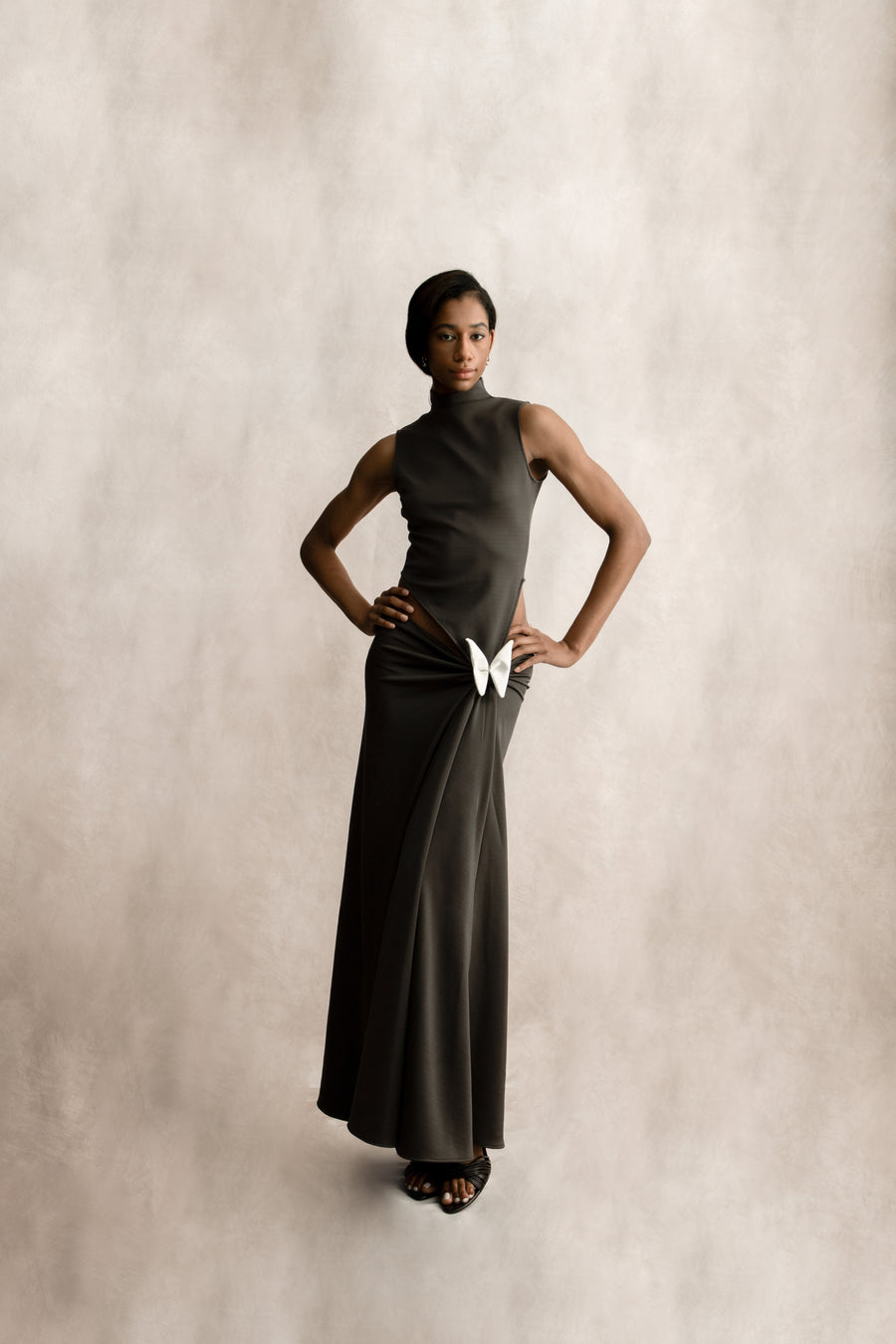
The High-Neck Low-Rise Draped Wrap Dress - Graphite is a strong option when you want formality with more coverage. The high neckline keeps the silhouette clean, while the low-rise drape prevents the look from becoming static.
We recommend this for private viewings and more serious art events where the atmosphere is formal but not flashy. It says discipline, which is often the right language in a room full of curators and collectors.
4. High-neck low-rise draped wrap dress in taupe
The taupe version of the wrap dress is softer and slightly more approachable. The High-Neck Low-Rise Draped Wrap Dress – Taupe is ideal for spring and early autumn events where the lighting is generous and the dress needs to read as elegant from across the room.
It is one of the best formal outfit ideas for art events if you prefer understatement. The shape does the work, so you do not need to add much else.
5. High-neck fitted tulip appliqué dress in graphite
The High-Neck Fitted Tulip Appliqué Dress - Graphite brings texture into the picture without turning decorative details into noise. That makes it especially effective for art events, where a textile element can feel more thoughtful than a shiny embellishment.
We recommend this for evening openings and more formal cultural events because it balances structure with visual depth. The appliqué creates interest, but the silhouette remains disciplined.
6. High-neck fitted tulip appliqué dress in slate
The High-Neck Fitted Tulip Appliqué Dress - Slate is the cooler, quieter version. Slate is useful when you want a more modern and less romantic impression, which can be a very good decision in a gallery context.
From our experience, slate reads particularly well under indoor lighting because it holds its shape visually. It is refined, but not precious.
7. High-neck fitted tulip appliqué dress in taupe
The taupe version is the most softly luxurious of the three tulip appliqué options. The High-Neck Fitted Tulip Appliqué Dress – Taupe feels cultured and elegant without becoming too formal for a more conversational art dinner.
We recommend it for events where you may move from cocktails to a seated program. It is strong enough to hold the room, but not so severe that it feels rigid.
8. Minimal column silhouette in graphite
A clean column is one of the smartest formal outfit ideas for art events because it lets the wearer control the room through proportion instead of embellishment. Even when the dress is simple, the body line can feel powerful if the fit is exact.
We recommend a graphite column for serious openings and black-tie-leaning art events. It pairs especially well with restrained jewelry and a sculptural clutch.
9. Soft draped neutral for daytime-to-evening art events
Some art events begin in daylight and end at night. Those are the hardest to dress for because the outfit has to work in two different lighting conditions. A soft draped neutral can bridge that gap beautifully.
From our experience, this is where taupe and slate are especially useful. They do not shout during the day, and they still feel elevated after dark.
10. Structured monochrome with one clean shoulder line
Monochrome dressing is reliable because it reduces visual clutter. When the event itself is full of visual interest, the clothing should not compete. A structured monochrome look gives you that balance.
We recommend using one of the HER.I draped silhouettes as the base and keeping everything else calm. One good line is usually enough.
11. Textured formal dress for curator-led evenings
A curator-led event often has a more intellectual atmosphere, which makes texture a smart move. The fitted tulip appliqué direction is especially effective here because it feels deliberate rather than ornamental. It signals care, not excess.
That is one reason formal outfit ideas for art events should not all look the same. The room changes, so the outfit should adapt.
12. Polished art-evening ensemble built around one focal point
The best final outfit idea is really a styling rule: pick one focal point and stop there. If the dress has sculptural shoulder detail, keep the rest calm. If the dress has texture, keep the jewelry quieter. If the silhouette is bold, let it remain the headline.
That principle is very HER.I. The brand’s power lies in restraint, not overstatement, and that is exactly why it works so well for art events.
How to style art-event looks without overdoing it
We recommend treating the outfit as a composition. Art-event dressing is not about stacking details. It is about editing. A clean neckline, a strong shoulder line, or a controlled drape can already do enough. Once that structure is in place, accessories should support the look rather than rewrite it.
Start with the silhouette. Then look at the texture. Then the color. Only after those decisions should you think about earrings, bag shape, or outerwear. That order matters because art events are visually sensitive environments. If the clothing is too busy, the eye stops at the outfit instead of moving through the person.
For more context, the broader HER.I occasionwear language also translates well into other formal settings. You can see that same restrained logic in pieces such as the One-Shoulder Low-Rise Draped Dress - Graphite and the High-Neck Fitted Tulip Appliqué Dress - Slate. They work because they hold silhouette memory — the dress is memorable without forcing the issue.
Shoes, bags, and finish details
Shoes should stay elegant and quiet. If the dress is doing the talking, the shoes should not interrupt. We recommend slim heels, refined sandals, or polished closed-toe options depending on season and venue. Avoid anything too chunky or too literal. Art events are not the place for gimmicks.
Bags should be small enough to disappear when needed. A structured mini bag or sculptural clutch is usually the safest choice. The goal is not to carry your life around; it is to preserve the line of the outfit. Jewelry should follow the same rule. One luminous point is usually enough.
From our experience, the most successful final looks are the ones that feel complete before the accessories are added. That means the dress should already carry the outfit. The rest only sharpens the impression.
Why HER.I works for formal art events
HER.I is built around deliberate restraint, sculptural softness, and silhouette memory, which is exactly the right mindset for formal art-event dressing. Art spaces are not shouting spaces. They reward confidence, precision, and a sense that the wearer understands proportion.
The strongest formal outfit ideas for art events usually come from the same place: clean lines, thoughtful draping, and a color palette that feels mature rather than trendy. HER.I’s graphite, taupe, slate, and softened structural shapes give you all of that without making the outfit feel overly styled.
If you want a safe entry point, start with the High-Neck Low-Rise Draped Wrap Dress - Graphite or the One-Shoulder Low-Rise Draped Dress – Taupe. If you want more texture, move toward the tulip appliqué pieces. That is the cleanest way to build a formal art-event wardrobe without clutter.
FAQs
What should I wear to a formal art event?
Choose a refined silhouette with restrained styling. A draped one-shoulder dress, a high-neck wrap dress, or a textured fitted dress are all strong options when the event calls for formal dressing.
Can I wear black to an art event?
Yes, absolutely. Black is still one of the easiest choices for formal art events because it feels timeless, serious, and versatile. Just make sure the silhouette is interesting enough to avoid looking flat.
Are bold prints appropriate for art events?
Sometimes, but not often in formal settings. We recommend keeping the focus on shape and texture instead of loud prints unless the invitation clearly supports a more expressive dress code.
Should I dress more creatively for a gallery opening?
Creativity is welcome, but it should be edited. A sculptural dress, a textured surface, or an unexpected drape can feel creative without becoming distracting.
What colors work best for formal outfit ideas for art events?
Graphite, taupe, slate, black, and soft neutrals are the safest and most elegant choices. These colors photograph well, feel sophisticated, and stay focused on the wearer rather than the outfit alone.
How do I avoid looking overdressed at an art event?
Keep one focal point only. If the dress has drama in the shoulder or texture in the fabric, keep everything else calm. Formal art-event dressing should feel intentional, not theatrical.


