


Authored by HER.I — A modern occasionwear house based in New York, exploring clothing as an act of quiet power. Defined by deliberate restraint, sculptural softness, and silhouette memory, our collections are designed for meaningful settings where clothing is chosen carefully, worn with intention, and remembered long after the moment has passed. Produced in limited numbers and offered through select retail partners, HER.I approaches occasionwear through precision, restraint, and lasting presence.
True elegance is rarely an accident. Behind every exquisite drape, structured shoulder, and flawlessly finished hem lies a meticulous architecture of design. The study and application of garment construction techniques in luxury fashion separate transient trends from enduring occasionwear. At HER.I, we believe that the soul of a garment resides in its internal framework—the unseen stitches, the precise bias cuts, and the tailored canvassing that grant a piece its silhouette memory and sculptural softness.

From our experience, understanding these high-end methodologies allows the discerning wearer to appreciate the quiet power of their wardrobe. It is not merely about the outer fabric, but how the fabric is manipulated to interact with the human form. When we discuss garment construction techniques in luxury fashion, we are referencing centuries of sartorial evolution, refined into a modern context of deliberate restraint. This authoritative guide will explore the pivotal methods utilized by premium ateliers to craft garments that command a lasting presence.
Table of Contents
- 1. The Architecture of Silhouette Memory
- 2. Sculptural Softness Through Advanced Draping
- 3. Haute Couture Seam Finishing and Edge Treatment
- 4. The Geometry and Mastery of Precision Pleating
- 5. Asymmetry and the Discipline of Tailoring Restraint
- 6. Summary Table: Luxury Construction Applications
- 7. Frequently Asked Questions
- 8. Academic and Curatorial References
1. The Architecture of Silhouette Memory
The concept of silhouette memory refers to a garment's ability to retain its intended shape, movement, and volume regardless of how it is worn or stored. In the realm of garment construction techniques in luxury fashion, achieving silhouette memory requires a profound understanding of internal structuring. A garment without a proper foundation will inevitably collapse, losing its intended aesthetic and failing to project quiet power.
This structural integrity is achieved through advanced interfacing, pad-stitching, and canvassing. Traditional tailoring relies on horsehair canvas—a blend of wool and horsehair that is highly resilient and molds to the wearer's body over time through body heat and moisture. In modern luxury occasionwear, we utilize specialized fusibles and organza underlinings to impart crispness without sacrificing lightness. We recommend observing the lapel roll and shoulder slope of high-end outerwear to identify the presence of these foundational elements. A rolled, rather than pressed, lapel is a hallmark of superior garment construction techniques in luxury fashion, indicating that the fabric has been coaxed into its shape through hundreds of microscopic hand-stitches.
2. Sculptural Softness Through Advanced Draping
While tailoring provides rigid architecture, draping introduces fluidity and grace. Sculptural softness is a defining pillar of the HER.I design philosophy, achieved only through masterful draping techniques. Draping involves working with fabric directly on a three-dimensional dress form, allowing the designer to manipulate the material's natural grain and gravity.
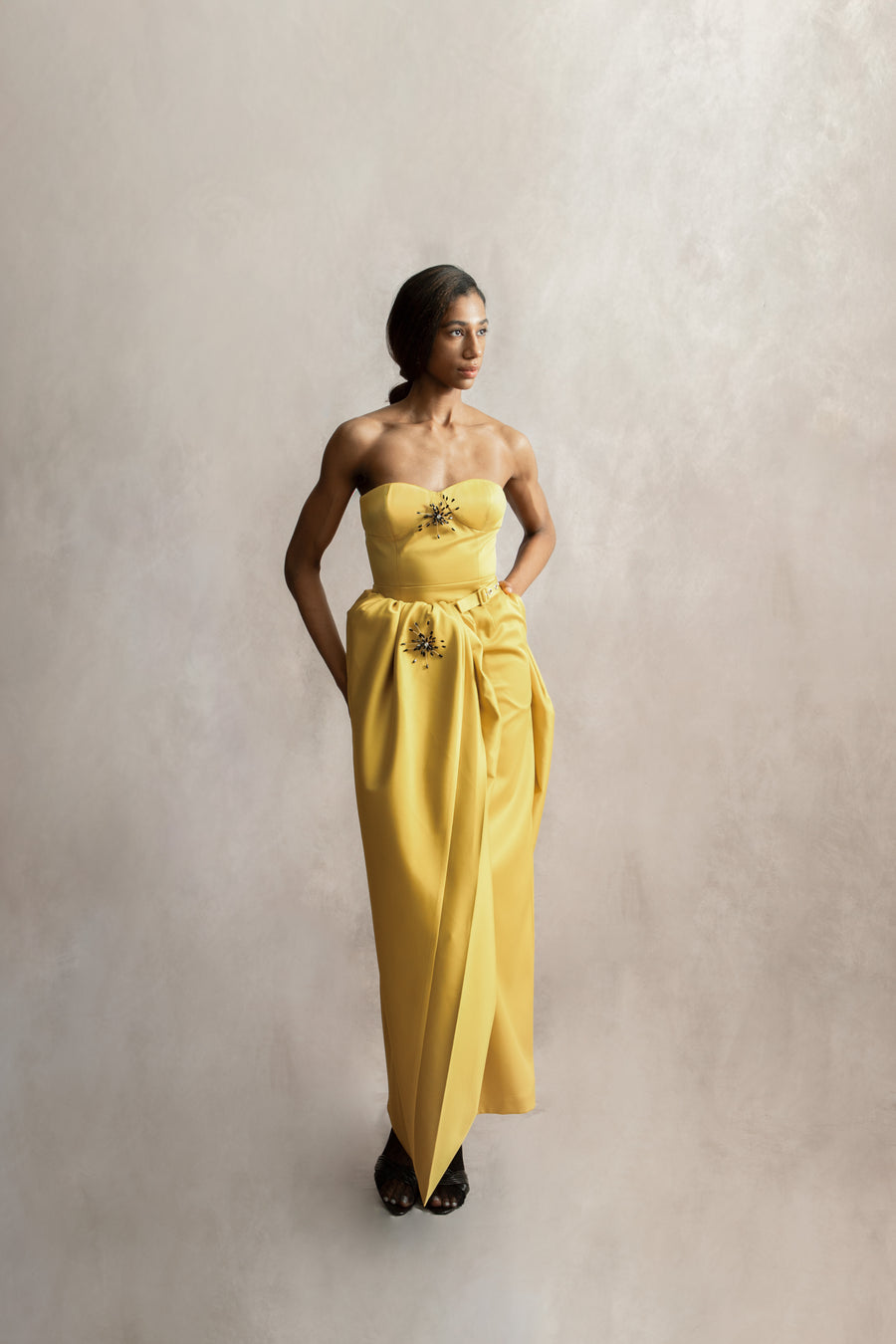
One of the most complex garment construction techniques in luxury fashion is the manipulation of the bias cut. Fabric cut on a 45-degree angle to its straight grain gains elasticity, allowing it to glide over the body's contours with liquid elegance. From our experience, balancing the tension of draped fabric requires absolute precision to prevent sagging over time. This technique is beautifully exemplified in pieces that require a columnar, fluid fall. For an illustration of this method, one can look to the Draped Column Maxi Skirt – Mimosa and the pristine Draped Column Maxi Skirt – Ivory. In these designs, the fabric is engineered to cascade with deliberate restraint, creating a silhouette that is both striking and effortlessly soft.
3. Haute Couture Seam Finishing and Edge Treatment
The interior of a luxury garment should be as impeccably finished as the exterior. The application of premium seam finishing is a non-negotiable standard within garment construction techniques in luxury fashion. Fast fashion relies on the overlock machine (serger) for speed and cost-efficiency. In contrast, luxury occasionwear utilizes techniques that enclose raw edges entirely, protecting the fabric from fraying and providing a smooth, frictionless interior against the skin.
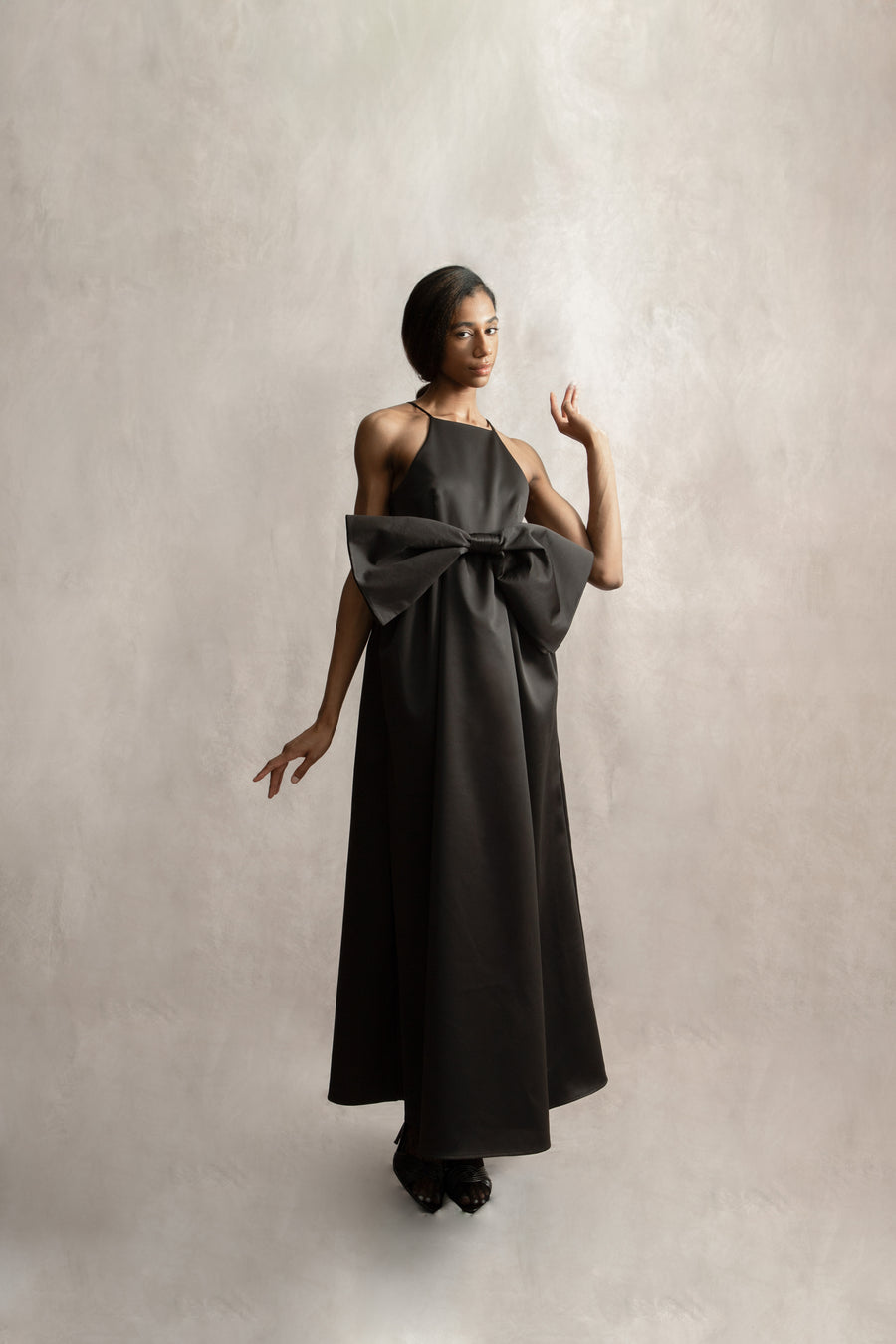
We highly value the French seam, where the raw edges are folded in on themselves and sewn twice, creating a narrow, elegant ridge. For thicker fabrics, Hong Kong binding—where the seam allowance is encased in a contrasting or matching bias strip of silk or lining fabric—is a mark of exceptional quality. Furthermore, hems on luxury occasionwear are rarely stitched by machine. Instead, blind hemming is executed by hand, catching only a single thread of the outer fabric so that the stitch remains entirely invisible. This level of detailing is paramount in structured yet feminine pieces, such as the Square-Neck A-Line Dress with Oversized Bow - Noir and its vibrant counterpart, the Square-Neck A-Line Dress with Oversized Bow - Scarlet. The oversized bow detailing requires immense internal structural support and immaculate edge finishing to maintain its dramatic, architectural volume.
4. The Geometry and Mastery of Precision Pleating
Pleating is an ancient art form that has been continuously refined through modern garment construction techniques in luxury fashion. Creating a pleated garment that moves dynamically while retaining its memory requires mathematical precision and complex thermal treatments. Pleats must be calculated not only for their static appearance but for how they expand and contract with the kinetic energy of the wearer.
From our experience at HER.I, manipulating pleats to achieve a columnar aesthetic without adding bulk to the waistline requires deliberate restraint in pattern drafting. Techniques such as sunburst pleating, knife pleating, and engineered accordion pleating are utilized depending on the desired drape and fabric weight. To set the pleats permanently, the fabric is often placed within heavy cardboard molds and subjected to high-pressure steam. This transforms the textile, giving it a new structural DNA. You can observe the profound impact of this technique in the linear precision of the Pleated Column Maxi Skirt – Umber and the elevated proportion of the Pleated High-Waisted Maxi Skirt – Slate, where the pleating creates a rhythm of shadow and light as the wearer moves.
5. Asymmetry and the Discipline of Tailoring Restraint
Designing an asymmetrical garment is an exercise in complex geometry. When the right and left sides of a pattern differ, the designer must calculate how to distribute the weight of the fabric so that the garment does not shift uncomfortably on the body. This challenge represents one of the highest tiers of garment construction techniques in luxury fashion.
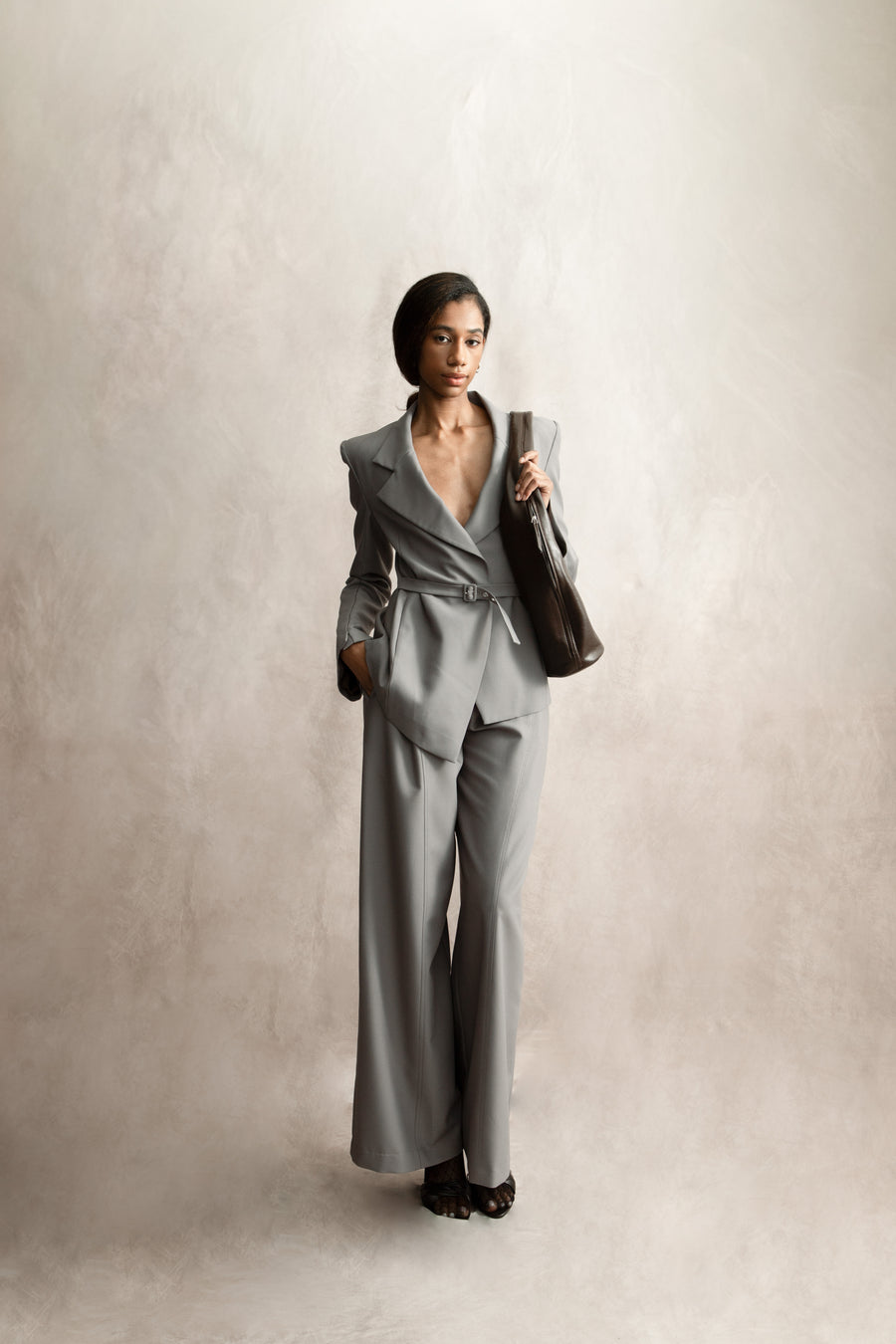
Achieving balance in an unbalanced silhouette requires strategic anchoring. This might involve an internal grosgrain waist stay to hold the garment securely to the body, or asymmetrical darting to contour the fabric uniquely on each side. We recommend studying garments that utilize negative space—cutouts or windowing—as these require immense technical skill to prevent the garment from losing its structural tension. A perfect manifestation of this philosophy is found in the LA Window-Cut Belted Asymmetric Blazer – Slate and the deeply commanding LA Window-Cut Asymmetric Blazer – Noir. The architectural cutouts and asymmetric hemlines demand flawless canvassing and edge finishing to ensure the blazer maintains its commanding shape while offering a glimpse of vulnerability.
6. Summary Table: Luxury Construction Applications
To further illustrate the complexities of high-end design, we have provided a summary of the core garment construction techniques in luxury fashion and their intended effects upon the final silhouette.
| Construction Technique | Execution Method | Purpose & Visual Effect |
|---|---|---|
| Pad-Stitching & Canvassing | Hand-stitching horsehair canvas to the lapel and chest. | Provides shape memory, structure, and a natural roll to tailored jackets. |
| Bias Cutting | Cutting fabric at a 45-degree angle to the straight grain. | Creates sculptural softness, allowing the fabric to drape liquidly over contours. |
| French & Bound Seams | Enclosing raw fabric edges entirely within the seam allowance. | Ensures interior longevity, prevents fraying, and elevates internal aesthetics. |
| Engineered Pleating | Thermal setting of fabric within calculated cardboard molds. | Introduces dynamic movement, volume control, and geometric texture. |
| Internal Anchoring (Stays) | Applying grosgrain ribbons to the interior waist or shoulders. | Balances asymmetric designs and prevents the garment from shifting during wear. |
7. Frequently Asked Questions
8. Academic and Curatorial References
To further explore the profound history and academic study of garment construction techniques in luxury fashion, we invite you to consult the following esteemed institutions dedicated to the preservation of sartorial arts:
- The Costume Institute at The Metropolitan Museum of Art – An unparalleled archive of haute couture construction, historical silhouettes, and textile mastery.
- The Museum at FIT (Fashion Institute of Technology) – Offering extensive exhibitions and academic insights into the evolution of modern tailoring and luxury draping techniques.
- Victoria and Albert Museum (V&A) Fashion Collection – A comprehensive global collection documenting the intricate techniques of bespoke tailoring, embroidery, and structural dressmaking through the centuries.


