


Deciding exactly what to wear to a luxury event is an exercise in strategic communication. When you receive an embossed invitation to a charity gala, an elite gallery opening, or a high-society wedding, the immediate panic of wardrobe selection often sets in. Society has trained us to equate luxury with loud, ostentatious displays of wealth, but true elegance operates on a completely different frequency. At HER.I, we explore clothing as an act of quiet power. We firmly believe that what you wear to a luxury event should be defined by deliberate restraint, sculptural softness, and silhouette memory.

From our experience dressing women for meaningful, high-stakes settings, the most captivating individual in the room is never the one wearing the loudest logo. It is the woman whose garment moves with her, tailored with structural precision and draped with intention. Knowing what to wear to a luxury event requires a deep understanding of dress codes, fabric architecture, and the psychology of formal attire. You are not just putting on a dress; you are participating in a tradition of sartorial excellence that will be remembered long after the moment has passed.
In this uncompromising guide, we will dismantle the anxiety surrounding formal dress codes. We will walk you through the architectural choices of modern occasionwear, explain why certain fabrics project authority, and provide a definitive framework for deciding exactly what to wear to a luxury event without sacrificing your personal aesthetic identity.
Table of Contents
- 1. Rejecting Loud Luxury: The Power of Restraint
- 2. Decoding the Luxury Dress Code
- 3. Architectural Silhouettes That Command the Room
- 4. Silhouette Memory and Fabric Drape
- 5. The Psychology of Occasionwear Color
- 6. Summary Matrix: Event Type and Attire
- 7. Frequently Asked Questions
- 8. Authoritative References
1. Rejecting Loud Luxury: The Power of Restraint
If you are struggling with what to wear to a luxury event, the first rule is to eliminate any garment that relies on brand recognition to validate its worth. Fast fashion and the logomania of the past decade have severely diluted the definition of luxury. A gown covered in designer monograms belongs on a billboard, not in a ballroom. We recommend adopting a philosophy of deliberate restraint.
When selecting what to wear to a luxury event, the luxury must be inherent in the garment's construction. It is found in the weight of the crepe, the invisible hand-stitching of a hem, and the structural integrity of a corset. An expertly tailored dress commands respect silently. It allows the wearer to enter a room and be noticed for her presence, rather than her purchasing power. The modern occasionwear house focuses on garments that act as a sophisticated frame for the woman, ensuring that the clothing supports her narrative rather than overshadowing it.
2. Decoding the Luxury Dress Code
The greatest source of anxiety when determining what to wear to a luxury event is the dress code printed at the bottom of the invitation. Deciphering these terms is non-negotiable. Ignoring a dress code is not a sign of rebellion; it is a lack of social grace. Let us break down the absolute requirements for the three most common luxury tiers.
Black Tie: The Standard of Formality
Black Tie is the most frequently encountered luxury dress code. We firmly state that Black Tie requires a floor-length gown. While some modern interpretations suggest that a highly structured midi-dress is acceptable, we recommend erring on the side of traditional elegance. You want to wear something that features architectural tailoring. A sweeping, floor-grazing hemline creates a column of color that elongates the body and projects absolute formality. Choosing what to wear to a luxury event with a Black Tie designation means prioritizing timeless silhouettes over fleeting trends.
White Tie: The Pinnacle of Occasionwear
White Tie is exceptionally rare and represents the absolute zenith of formal dressing. If you are invited to a state dinner or a royal reception, your decision on what to wear to a luxury event is heavily restricted. You must wear a full-length, voluminous evening gown. Shoulders are often expected to be covered by a wrap or opera gloves upon arrival. This is the arena for dramatic, sweeping fabrics and heirloom jewelry.
Creative Formal or Avant-Garde Luxury
Often seen at fashion galas, art museum benefits, and high-end launch parties, Creative Formal allows you to push the boundaries of traditional tailoring. When deciding what to wear to a luxury event of this nature, you can experiment with dramatic asymmetry, unexpected cut-outs, and heavy embellishments. The goal here is to wear a piece of art.
3. Architectural Silhouettes That Command the Room
The cut of a dress entirely dictates its psychological impact. At HER.I, our collections are defined by sculptural softness. When choosing what to wear to a luxury event, you must select a silhouette that flatters your form while providing structural support. We recommend analyzing the specific cut of the bodice and the drape of the skirt.
The Authority of the Strapless Gown
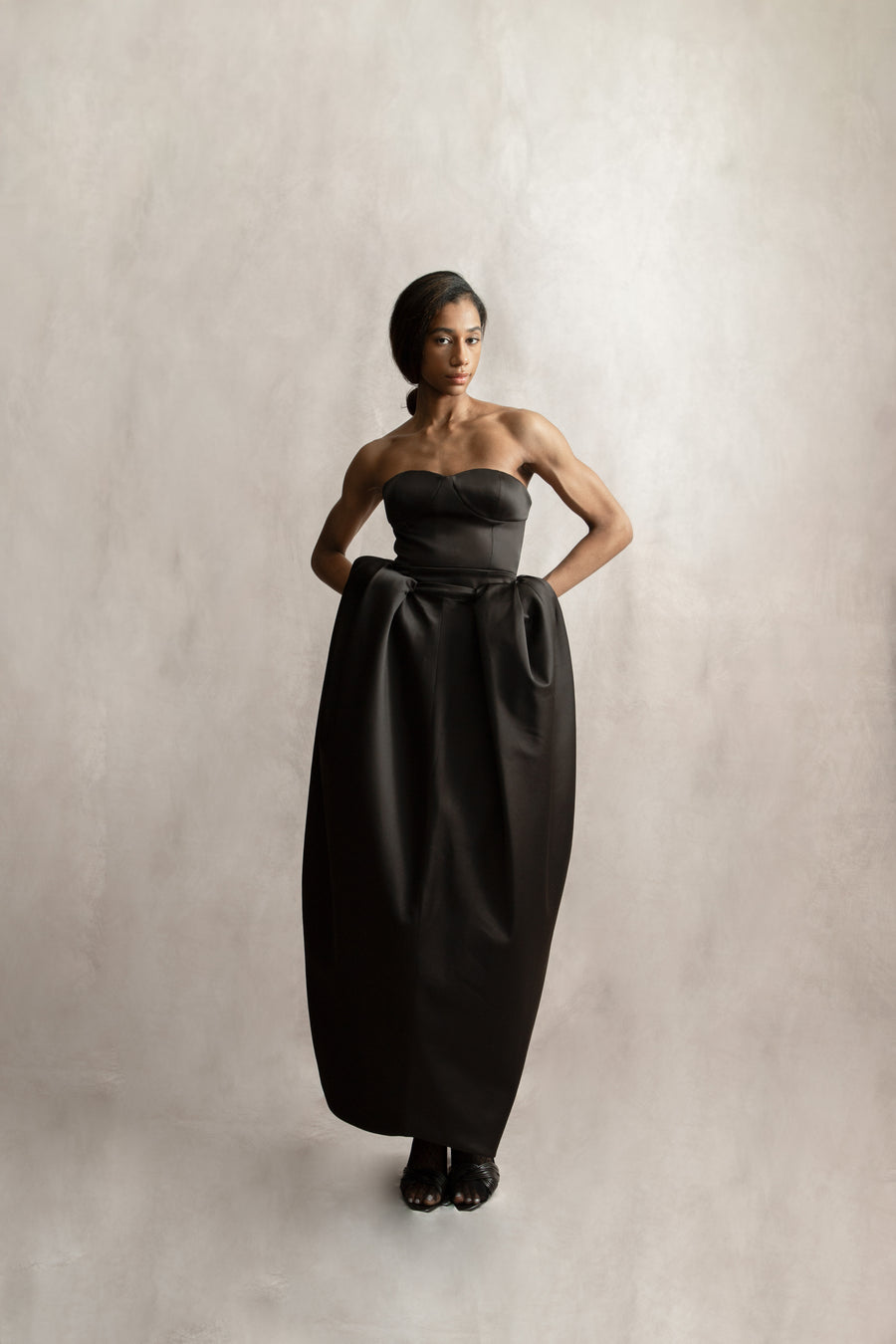
A strapless neckline exposes the collarbone and shoulders, immediately drawing the eye upward. It is a silhouette that demands flawless posture and unapologetic confidence. However, a strapless gown must be engineered perfectly; if you are pulling it up all night, the illusion of luxury is shattered. For classic Black Tie affairs, the Strapless Two-Piece Wrap Gown – Noir provides an impenetrable, sculptural elegance. If you prefer a subtle infusion of color, the Strapless Corset Fitted Slit Dress - Cyanite Blue utilizes foundational corsetry to ensure the garment remains exactly where it was designed to sit, allowing you to move through the room without hesitation.
The Dynamics of Asymmetry and Draping
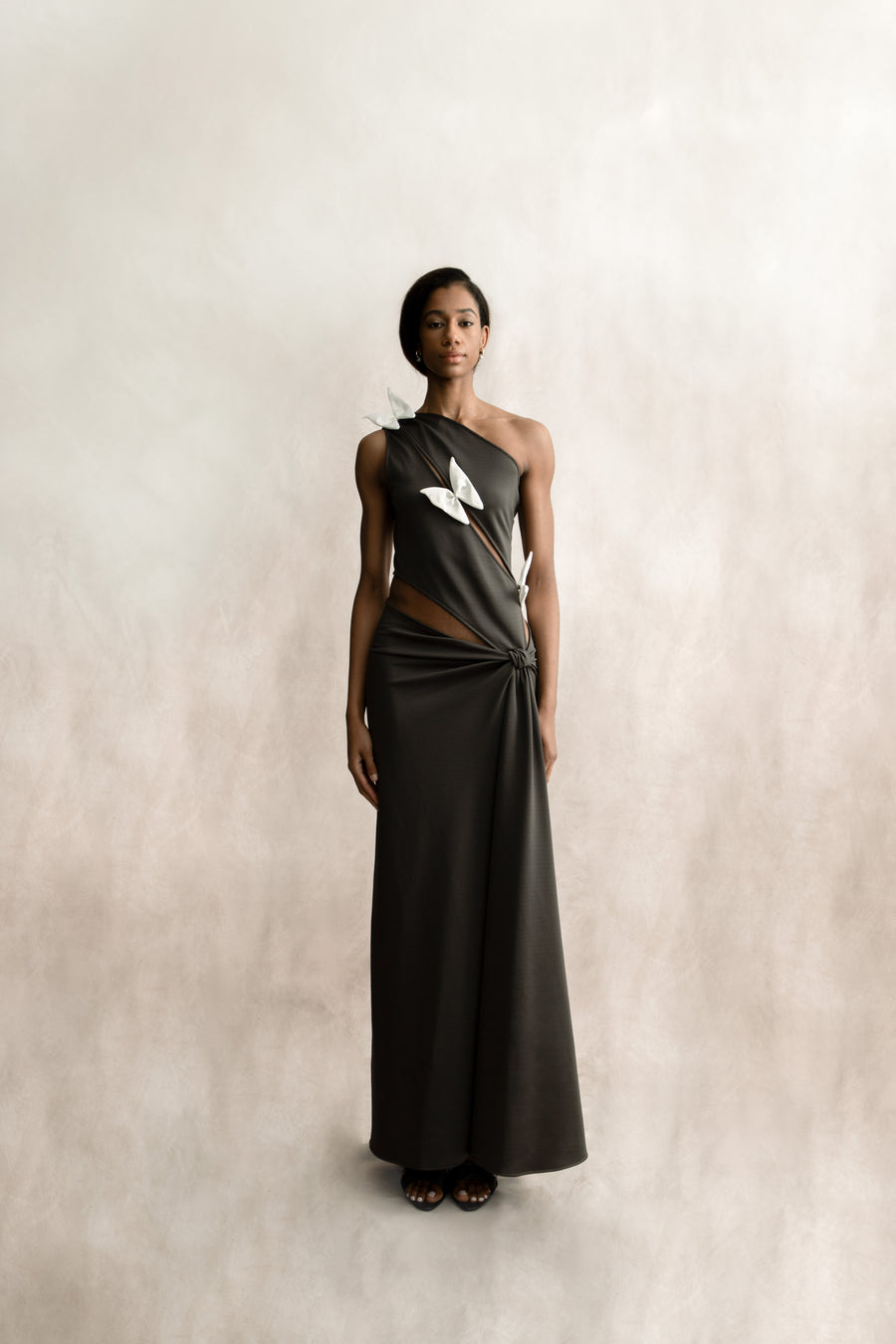
Draping is the most difficult technique to master in pattern-making, which is why it is a hallmark of true luxury. An asymmetric cut creates a dynamic visual line that keeps the eye moving. If you are attending a gala and wondering what to wear to a luxury event that feels modern yet deeply rooted in classical sculpture, we recommend the One-Shoulder Low-Rise Draped Dress - Graphite. The singular shoulder grounds the garment, while the low-rise drape adds a layer of fluid movement. It is an act of deliberate, calculated design.
The High-Neck Armor
There is immense power in being fully covered. A high-neck silhouette projects untouchable authority and conservative elegance. It forces the observer to focus on the wearer's face and the immaculate tailoring of the fabric. For a winter gala or a strictly formal conservative event, the High-Neck Low-Rise Draped Wrap Dress – Taupe offers a masterful balance of coverage and structural interest. Alternatively, the High-Neck Fitted Tulip Appliqué Dress - Slate introduces subtle, three-dimensional texture to a highly disciplined cut.
4. Silhouette Memory and Fabric Drape
From our experience, the distinction between a dress that merely looks expensive in a photograph and a dress that performs as true luxury in person is determined by fabric memory. When deciding what to wear to a luxury event, you must consider how the fabric behaves when you walk, when you sit, and when you turn. Does the fabric fight your body, or does it remember the silhouette it was cut to hold?
Heavy crepes, double-faced silks, and structured wool blends possess memory. They drape heavily toward the floor, resisting static cling and cheap wrinkling. If you are leaning toward embellishment, the execution must be flawless. Choosing what to wear to a luxury event allows for sequins and lace, provided they are applied with restraint. The Pointelle Knit Sequin Maxi Dress – Ivory catches ambient light with a sophisticated gleam, rather than a harsh glare. Similarly, the Pearl-Embellished Lace Maxi Dress – Ivory uses heavy pearl detailing to weigh the lace down, ensuring the skirt moves with liquid grace rather than stiff rigidity.
5. The Psychology of Occasionwear Color
The color you select for what to wear to a luxury event dictates your narrative before you even speak. While black is the eternal, uncompromising standard for eveningwear, venturing into muted, complex tones demonstrates a sophisticated sartorial vocabulary.
We advise avoiding neon or overly saturated primary colors, as they often photograph harshly and can read as aggressively trendy. Instead, lean into deep, mineral-inspired palettes. Graphite, slate, and taupe offer the solemnity of black but with an added layer of visual depth. If you are attending an event where standing out is appropriate, icy blues and crisp ivories project an aura of untouchable precision. When styling these complex colors, match them with metallic or tonal footwear to maintain the uninterrupted line of the silhouette.
6. Summary Matrix: Event Type and Attire
To assist in your final decision regarding what to wear to a luxury event, we have mapped specific dress codes to our recommended architectural silhouettes.
| Luxury Event Type | Dress Code Requirement | Recommended Silhouette | Styling Approach |
|---|---|---|---|
| Charity Gala / Opera | Strict Black Tie | Floor-length, Strapless or Corseted Column | Minimalist diamond jewelry, sleek updo, structural clutch. |
| Museum Benefit / Fashion Party | Creative Formal | Asymmetric Draping or Subdued Sequins | Architectural footwear, bold singular cuff bracelet. |
| State Dinner / Royal Reception | White Tie | Voluminous High-Neck or Full Skirt | Opera gloves, heirloom-quality stones, severe restraint. |
| Luxury Brand Launch | High-End Cocktail | Midi-length Tulip Appliqué or Draped Wrap | Statement heels, modern metallic hardware. |
7. Frequently Asked Questions
Can I wear a short dress if I do not know what to wear to a luxury event with a Black Tie dress code?
We strictly advise against it. Black Tie demands floor-length attire. Wearing a cocktail-length or short dress to a Black Tie event breaks the fundamental rule of formal uniformity and can be perceived as disrespectful to the host. If you must avoid a trailing hem, a sharply tailored, floor-skimming wide-leg tuxedo trouser suit is the only acceptable alternative to a gown.
How should I handle outerwear when deciding what to wear to a luxury event in the winter?
Your outerwear must match the formality of your gown. Arriving at a luxury event in a casual puffer jacket instantly destroys the carefully curated architecture of your silhouette. We recommend a floor-length wool topcoat, a tailored silk-lined cape, or a faux-fur wrap. The outerwear should be draped over the shoulders rather than heavily belted, allowing the structure of the gown beneath to remain uncrushed.
Is it acceptable to wear white or ivory to a luxury event?
Unless the event is a wedding—in which case white and ivory are strictly forbidden to avoid competing with the bride—wearing ivory to a luxury gala is a brilliant strategic choice. An ivory gown projects confidence and requires impeccable tailoring, as light colors hide absolutely no flaws in construction. It stands out beautifully in a sea of standard black dresses.
8. Authoritative References
To ensure your understanding of high-end dress codes aligns with historical and contemporary fashion standards, we recommend reviewing the following authoritative sources on occasionwear:
- The Metropolitan Museum of Art's Costume Institute: A vital academic resource for understanding the historical evolution of the evening gown, silhouette memory, and the architectural construction of haute couture garments.
- Vogue: The Ultimate Guide to Black Tie Dress Codes: The definitive editorial standard for navigating contemporary luxury event requirements, detailing the precise boundaries of formal gala attire.


