


At HER.I, a modern occasionwear house based in New York, we explore clothing as an act of quiet power. Defined by deliberate restraint, sculptural softness, and silhouette memory, our collections are designed for meaningful settings. We believe that an unforgettable garment is born long before the first seam is sewn; it begins with the textile. The fabric selection for evening dresses is the architectural foundation of any gown. It dictates how the garment moves, how it captures light in a dimly lit ballroom, and how it remembers the shape of the wearer. When clothing is chosen carefully and worn with intention, the textile must be nothing short of extraordinary.

From our experience in the atelier, mastering the fabric selection for evening dresses requires a deep understanding of weight, tension, and drape coefficient. Produced in limited numbers and offered through select retail partners, HER.I approaches occasionwear through precision and lasting presence. In this comprehensive industry guide, we will analyze the structural and aesthetic properties of the ten most superior textiles used in luxury eveningwear, providing you with the expert knowledge needed to make informed, elegant choices for your next formal event.
Table of Contents
- Why Fabric Selection for Evening Dresses Defines Silhouette Memory
-
The 10 Best Fabric Selection for Evening Dresses
- 1. Heavy Silk Crepe (The Master of Draping)
- 2. Silk Faille (Architectural Volume)
- 3. Duchesse Satin (Lustrous Restraint)
- 4. Silk Chiffon (Ethereal Movement)
- 5. Liquid Matte Crepe (Sleek Dimensionality)
- 6. Structured Mikado (The Corsetry Champion)
- 7. Silk Georgette (Matte Sculpting)
- 8. Pointelle Knit (Tactile Innovation)
- 9. Embroidered Lace (Intricate Presence)
- 10. Silk Organza (Sheer Structure)
- Understanding Weight and Drape in Fabric Selection
- Summary Table: Top Fabric Selection for Evening Dresses
- Frequently Asked Questions (FAQs)
- References
Why Fabric Selection for Evening Dresses Defines Silhouette Memory
In high-end tailoring, we utilize the term "silhouette memory" to describe a garment's ability to hold its intended shape while in motion, returning gracefully to its resting state once the wearer stills. The fabric selection for evening dresses is the sole contributor to this phenomenon. A poorly chosen textile will collapse under its own weight or fight against the pattern's seam lines, resulting in a dress that looks overworked. Conversely, the correct fabric selection for evening dresses acts in harmony with gravity.
We recommend approaching your fabric selection for evening dresses by first identifying the intended emotion of the garment. Is the dress meant to project architectural authority, or is it intended to evoke a soft, romantic fluidity? Understanding the interplay between warp and weft tension is essential. For instance, historical garments housed at the Metropolitan Museum of Art's Costume Institute demonstrate how couturiers of the mid-20th century utilized fabric density to create shapes that defied traditional body contours. Today, at HER.I, we apply these exact historical tailoring principles to modern, minimalist designs.
The 10 Best Fabric Selection for Evening Dresses
1. Heavy Silk Crepe (The Master of Draping)
Silk crepe is characterized by its subtly pebbled texture, achieved through tightly twisting the yarns prior to weaving. From our experience, heavy silk crepe is unparalleled when the design demands a fluid, column-like fall that skims the body without clinging. It possesses an inherent weight that pulls the hemline toward the floor, creating a statuesque elongation of the wearer's figure. When executing the fabric selection for evening dresses, silk crepe is our preferred medium for minimalist gowns that rely on complex internal draping.
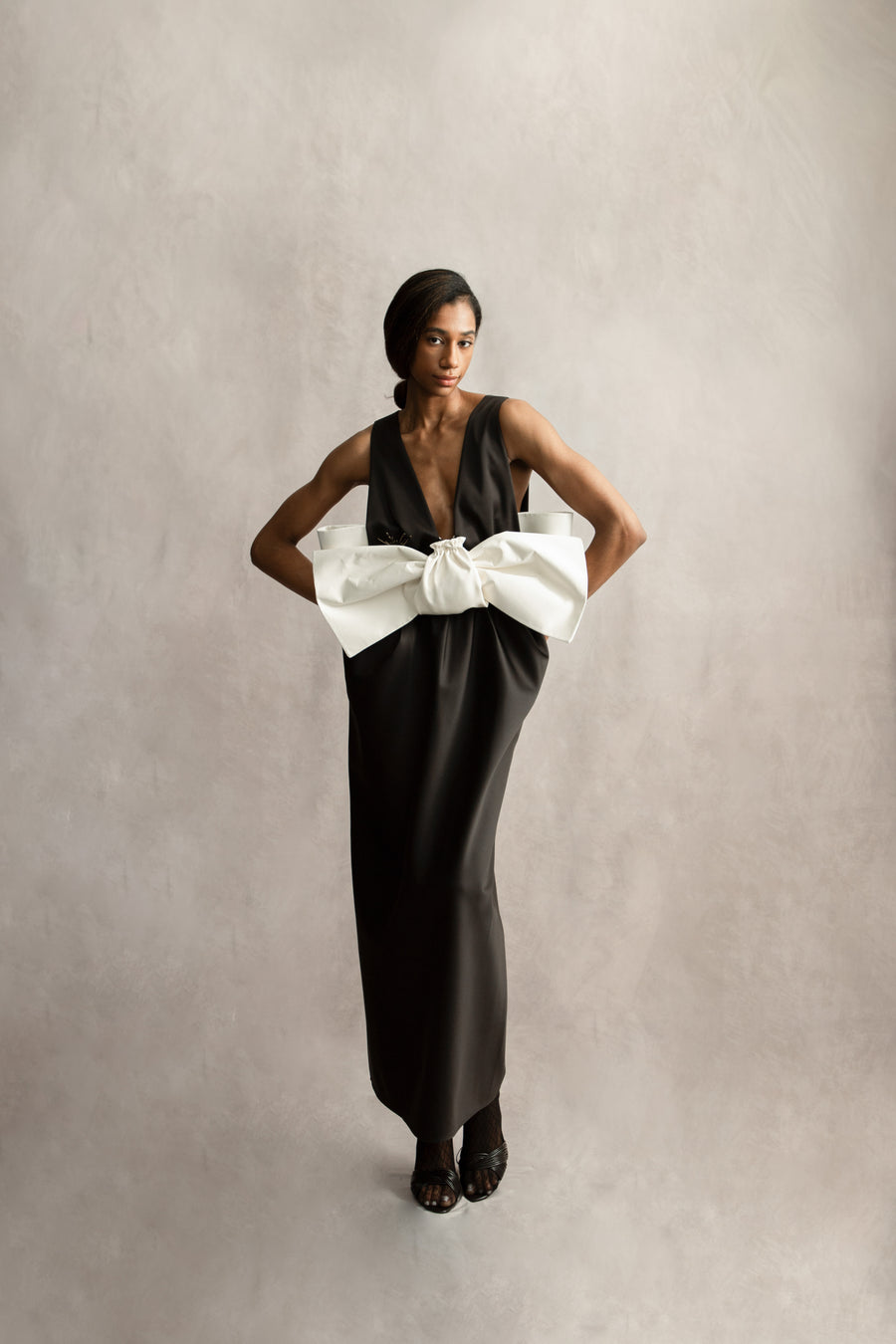
A pristine example of this application is our Deep V Column Gown with Oversized Contrast Bow – Black/Ivory. The dense crepe provides a matte canvas that allows the structural geometry of the oversized bow to take center stage, establishing a dynamic tension between the stark black column and the dramatic ivory accent.
2. Silk Faille (Architectural Volume)
Characterized by its distinct crosswise ribbing, silk faille offers a crisp, substantial hand-feel. We recommend this textile when your fabric selection for evening dresses requires the garment to hold an architectural shape independently of the body. Faille does not drape; it folds and sculpts. It is deeply associated with haute couture techniques due to its ability to retain sharp pleats and dramatic, sweeping hemlines without internal crinoline support.
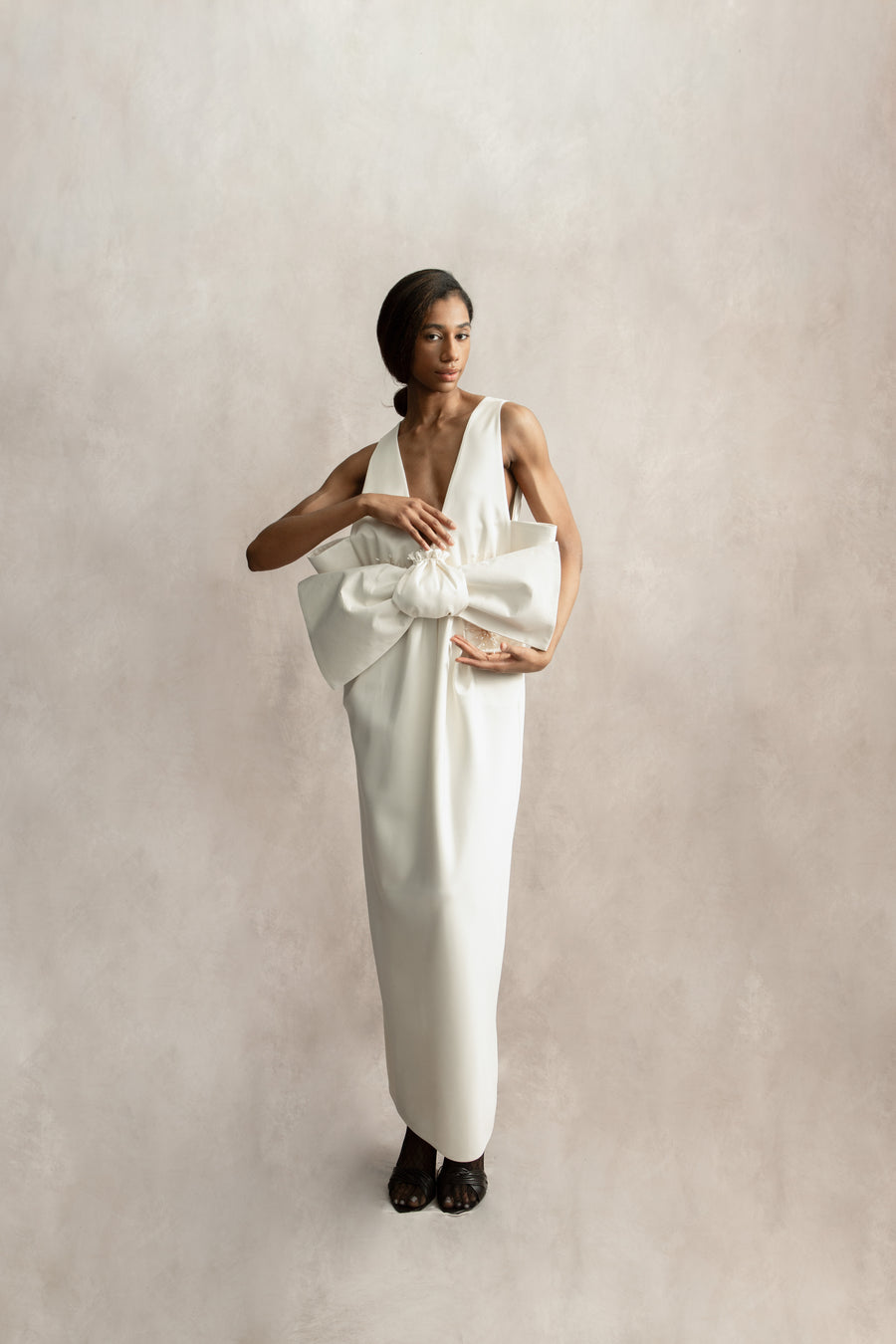
We utilize the structural integrity of this textile in our Deep V Column Gown with Oversized Bow – Ivory W. The faille ensures the plunging neckline maintains its sharp, precise edges throughout the evening, projecting an aura of deliberate restraint and quiet power.
3. Duchesse Satin (Lustrous Restraint)
Duchesse satin is a high-thread-count, heavy satin that emits a pearlescent glow rather than a high-shine gloss. In the realm of fabric selection for evening dresses, it is the pinnacle of luxury. The dense weave provides a smooth, flawless surface that refracts low lighting beautifully, making it ideal for evening events. Its structural memory allows for meticulous darting and contouring around the bodice.
Our application of this textile can be seen in the Deep V Column Gown with Oversized Bow – Ivory B. The duchesse satin allows the ivory tone to catch the light with subtle sophistication, ensuring the wearer is remembered long after the moment has passed.
4. Silk Chiffon (Ethereal Movement)
For designs that require transparency and weightless movement, silk chiffon is the definitive fabric selection for evening dresses. Woven with a plain weave from tightly twisted yarns, chiffon is sheer, delicate, and floats effortlessly upon the air. It is notoriously difficult to tailor, requiring immense precision to ensure the hems remain perfectly leveled.
When layered, chiffon creates a sense of depth and watercolor-like movement. We leverage these properties in the Strapless Two-Piece Wrap Dress – Mimosa. The fabric's lightness contrasts sharply with the precise tailoring of the wrap technique, embodying our philosophy of sculptural softness.
5. Liquid Matte Crepe (Sleek Dimensionality)
A modern variation of traditional crepe, liquid matte crepe offers enhanced elasticity and a heavier drape. We recommend this fabric selection for evening dresses that demand a sleek, uninterrupted silhouette. It forgives minor construction lines and moves like liquid over the skin, providing both extreme comfort and visual impact.
This textile is perfectly showcased in our Strapless Two-Piece Wrap Gown – Noir, where the depth of the black fabric absorbs light, creating an infinitely deep, sophisticated presence ideal for formal galas and black-tie affairs.
6. Structured Mikado (The Corsetry Champion)
Mikado is a luxurious silk blend that is heavier than satin but possesses a more subtle sheen. When your fabric selection for evening dresses involves internal corsetry, boning, or high-tension tailoring, Mikado is the ultimate choice. It conceals internal construction flawlessly, providing a smooth, structured exterior.
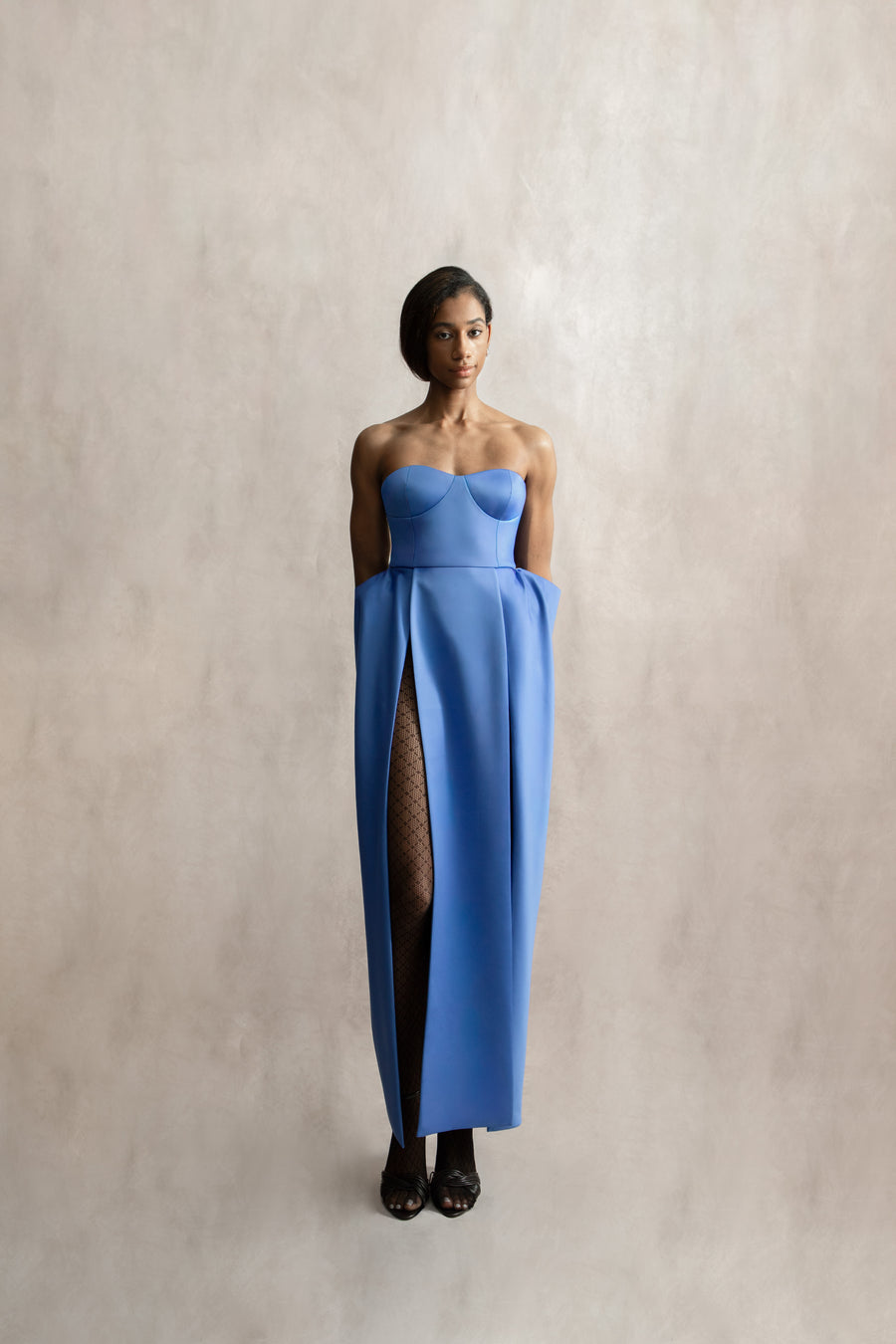
At HER.I, we use Mikado for garments requiring precise, rigid tailoring, such as the Strapless Corset Fitted Slit Dress - Cyanite Blue. The fabric supports the intricate corset architecture, ensuring the garment molds perfectly to the wearer while retaining its bold, sculptural shape.
7. Silk Georgette (Matte Sculpting)
Similar to chiffon but constructed with a slightly heavier and more opaque weave, silk georgette offers a beautiful matte finish and a springy drape. The fabric selection for evening dresses often relies on georgette when designers want the fluidity of chiffon without the extreme sheerness. It is an incredibly resilient fabric that holds gathering and shirring beautifully.
This textile is the foundation of our Strapless Corset Fitted Slit Dress – Mist Blue. The georgette allows the mist blue tone to appear soft and atmospheric, complementing the strict corsetry with a touch of visual delicacy.
8. Pointelle Knit (Tactile Innovation)
While knits are traditionally associated with daywear, advanced textile engineering has elevated them to the realm of eveningwear. A fine pointelle knit, especially when interwoven with subtle metallic or sequin threads, offers a modern, tactile alternative to traditional wovens. This fabric selection for evening dresses provides unparalleled comfort and a form-fitting memory.
We explore this innovative texture in our Pointelle Knit Sequin Maxi Dress – Ivory. The open-work pointelle pattern creates a subtle play of shadow and skin, while the knitted structure ensures the dress moves seamlessly with the body, defining clothing as an act of quiet power.
9. Embroidered Lace (Intricate Presence)
Lace remains a cornerstone of formal occasionwear. However, the fabric selection for evening dresses requires a discerning eye when choosing lace; it must be heavy enough to drape correctly but delicate enough to exhibit intricate artistry. Embroidered lace, particularly when adorned with pearls or subtle beadwork, adds a three-dimensional presence to a gown.
We approach this classic textile through a lens of modern restraint in the Pearl-Embellished Lace Maxi Dress – Ivory. By placing the intricate pearl embroidery over a minimalist, structured lining, we ensure the lace feels contemporary, intentional, and exceptionally luxurious.
10. Silk Organza (Sheer Structure)
Organza is a crisp, sheer silk fabric woven in a plain weave. Unlike chiffon, it possesses extreme stiffness and volume. We recommend this fabric selection for evening dresses when creating dramatic overlays, voluminous sleeves, or sheer architectural details that must defy gravity. Organza acts as the scaffolding of high fashion, offering structural presence while remaining visually weightless.
Understanding Weight and Drape in Fabric Selection
To truly master the fabric selection for evening dresses, one must understand the technical metrics of textiles, specifically Grams per Square Meter (GSM) and the drape coefficient. The GSM dictates the physical weight of the fabric. A heavy silk crepe may measure around 150 GSM, pulling downward to create a sleek column. A silk organza, measuring around 30 GSM, will project outward, creating volume without weight.
From our experience, the drape coefficient—a laboratory measure of how a fabric folds when suspended—is the secret to silhouette memory. Fabrics with a low drape coefficient, like Duchesse Satin, will form wide, majestic folds. Fabrics with a high drape coefficient, like Silk Georgette, will form narrow, rippling cascades. Aligning the drape coefficient with the pattern's geometry is the hallmark of premium occasionwear engineering.
Summary Table: Top Fabric Selection for Evening Dresses
Below is a quick reference guide to assist you in your fabric selection for evening dresses, outlining the core properties and ideal silhouettes for each textile.
| Fabric Type | Weight & Texture | Drape Characteristic | Ideal Silhouette |
|---|---|---|---|
| Heavy Silk Crepe | Heavy, matte, pebbled | Fluid, heavy downward pull | Column gowns, minimalist draping |
| Silk Faille | Medium-heavy, ribbed, crisp | Architectural, stiff, folding | A-line, sculpted bodices, bows |
| Duchesse Satin | Heavy, smooth, pearlescent | Majestic, wide folds | Ballgowns, structured eveningwear |
| Silk Chiffon | Ultra-light, sheer, soft | Ethereal, floating, airy | Flowing skirts, ethereal overlays |
| Structured Mikado | Heavy, subtle sheen, rigid | Stiff, highly structural | Corseted gowns, tailored fits |
| Silk Georgette | Light-medium, matte, sheer | Springy, rippling drape | Softly tailored wrap dresses |
| Pointelle Knit | Medium, textured, stretch | Form-fitting, clinging | Sleek, body-contouring maxi dresses |
Frequently Asked Questions (FAQs)
How do I choose the best fabric selection for evening dresses in warm climates?
From our experience, natural fibers are essential for breathability. We recommend focusing your fabric selection for evening dresses on silk chiffon or lightweight silk georgette. These textiles allow air circulation while maintaining a formal aesthetic. Avoid heavy synthetics or dense satins, which can trap heat and compromise comfort.
Does the fabric selection for evening dresses impact the fit of a corset?
Absolutely. Corsetry requires a fabric with high tensile strength and minimal stretch to conceal the internal boning and support the body. We highly recommend Structured Mikado or Duchesse Satin for corseted designs. Using a lightweight fabric like crepe over a corset requires specialized underlining to prevent the boning channels from showing through the garment.
Can a knit fabric be appropriate for black-tie eveningwear?
Yes, provided the execution is flawless. A pointelle knit integrated with fine metallic threads or sequins offers a highly modern, sophisticated approach to black-tie attire. The key is in the garment's silhouette memory and the quality of the yarn, shifting the aesthetic from casual to deliberate and refined.


