


As a modern occasionwear house based in New York, HER.I explores clothing as an act of quiet power. We are defined by deliberate restraint, sculptural softness, and silhouette memory. Our collections are designed for meaningful settings, where clothing is chosen carefully, worn with intention, and remembered long after the moment has passed. Because our pieces are produced in limited numbers and offered through select retail partners, HER.I approaches occasionwear through precision and lasting presence. It is through this lens of meticulous craftsmanship that we approach the nuanced process of Evaluating the Quality of Luxury Clothing.

In the contemporary fashion landscape, the term luxury is frequently applied to garments that merely carry a high price tag, rather than possessing intrinsic value. Evaluating the Quality of Luxury Clothing requires a discerning eye, an understanding of textile science, and an appreciation for the structural architecture of a garment. When you invest in occasionwear, you are investing in how a garment moves, how it retains its shape, and how it withstands the test of time. From our experience, true luxury whispers rather than shouts. It reveals itself in the hidden seams, the weight of the fabric, and the meticulous nature of the tailoring. We recommend applying the following six rigorous standards when Evaluating the Quality of Luxury Clothing.
Table of Contents
- 1. Analyzing Fabric Composition and Sculptural Softness
- 2. Inspecting Stitching, Seams, and Silhouette Memory
- 3. Examining Internal Construction and Linings
- 4. Assessing Hardware and Fastenings
- 5. Evaluating Draping, Tailoring, and Cut
- 6. Understanding Brand Philosophy and Production Restraint
- Summary Table for Evaluating the Quality of Luxury Clothing
- Frequently Asked Questions
- References
1. Analyzing Fabric Composition and Sculptural Softness
The foremost step in Evaluating the Quality of Luxury Clothing is examining the raw materials. The foundation of any exceptional garment is its textile. High-end occasionwear relies heavily on natural fibers such as silk, fine wool, cashmere, and premium cotton, often utilizing innovative blends to achieve a specific structural goal. From our experience, the hand-feel of a fabric reveals its pedigree. A luxury fabric should feel substantial yet possess a sculptural softness that allows it to move fluidly with the body while retaining its intended shape.
When assessing a garment, inspect the fabric care label. While some synthetic fibers are necessary for stretch or structural integrity, a garment composed entirely of inexpensive polyester cannot offer the breathability, drape, or longevity of natural fibers. For instance, creating the perfect drape requires a fabric with optimal weight and gravity. You can observe this exact balance in our Draped Column Maxi Skirt – Mimosa, where the textile is chosen specifically to fall with deliberate grace. Similarly, the Draped Column Maxi Skirt – Ivory demonstrates how a lighter hue demands an even higher density of fabric to ensure complete opacity and a luxurious, fluid finish. Evaluating the Quality of Luxury Clothing means demanding fabrics that serve both an aesthetic and a structural purpose.
2. Inspecting Stitching, Seams, and Silhouette Memory
We recommend turning a garment inside out when Evaluating the Quality of Luxury Clothing. The interior stitching is the skeleton of the piece. Look for high stitch density, which means more stitches per inch. High stitch density prevents seams from pulling apart under stress and ensures the garment maintains its structural integrity over time. In luxury tailoring, you should rarely see raw, overlocked edges. Instead, you should find French seams, bound seams, or flat-felled seams, which enclose the raw edge of the fabric completely, preventing fraying and providing a clean, smooth interior against the skin.
Seam construction is directly tied to what we call silhouette memory, the ability of a garment to hold its specific shape through wear and cleaning. When executing complex techniques like pleating, the stitching and pressing must be flawless. Take, for example, our Pleated Column Maxi Skirt – Umber. The pleats are set with precision, ensuring they do not collapse or lose their sharp architectural lines. The same level of rigorous seam construction is applied to our Pleated High-Waisted Maxi Skirt – Slate, where the high-waisted structure relies on reinforced internal seams to provide a supportive and flattering fit without bulky excess fabric. Evaluating the Quality of Luxury Clothing dictates that the inside of the garment must be as beautiful and well-crafted as the outside.
3. Examining Internal Construction and Linings
A crucial but often overlooked aspect of Evaluating the Quality of Luxury Clothing is the internal architecture, specifically linings, facings, and interfacings. A luxury garment does not simply hang from the shoulders or hips; it is built. In high-end blazers and outerwear, proper canvassing is required to give the chest shape and structure, rather than relying on cheap, glued-in fusing that bubbles and degrades after dry cleaning.
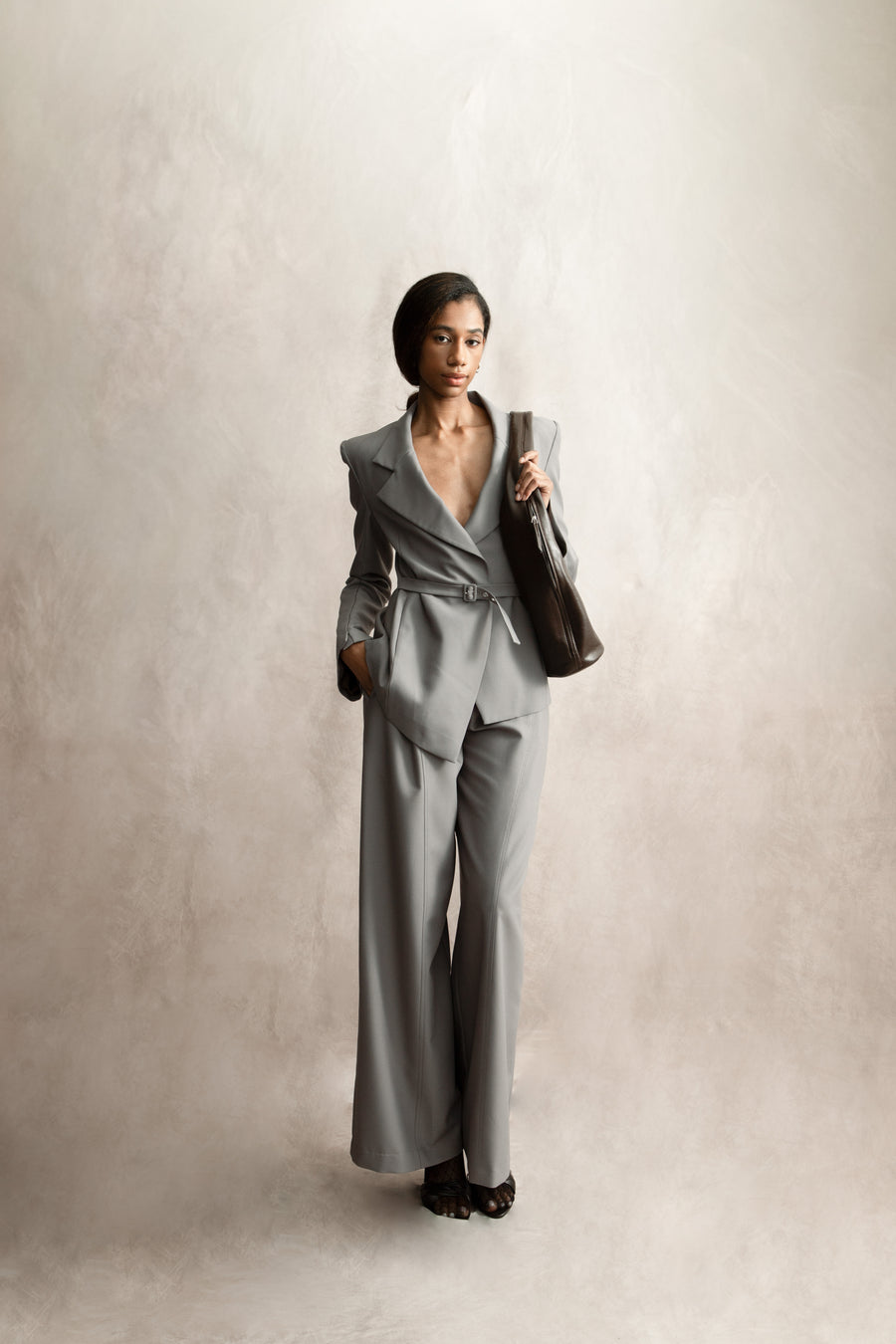
Linings should be crafted from breathable materials like silk or cupro, allowing the garment to slip easily over other layers while regulating body temperature. From our experience, the way a lining is attached speaks volumes about the manufacturer. A floating lining, attached securely but with enough ease to prevent pulling, is a hallmark of superior craftsmanship. Our LA Window-Cut Belted Asymmetric Blazer – Slate utilizes advanced internal construction to maintain its sharp, asymmetrical geometry without sacrificing comfort. Furthermore, the LA Window-Cut Asymmetric Blazer – Noir relies on meticulous internal facings to ensure that the window-cut details remain crisp and defined, demonstrating the deliberate restraint required in modern luxury tailoring.
4. Assessing Hardware and Fastenings
When Evaluating the Quality of Luxury Clothing, the hardware and fastenings act as the final punctuation marks of the design. Buttons, zippers, hooks, and belts should never feel like an afterthought. High-quality garments utilize materials such as genuine horn, mother-of-pearl, or custom-cast metals for their buttons. Zippers should glide effortlessly, lie flat without buckling the surrounding fabric, and ideally feature a locking mechanism at the pull.
We recommend closely examining the buttonholes. A luxury buttonhole is densely stitched, often featuring a keyhole shape for tailored garments, ensuring it does not fray with repeated use. Fastenings should also be visually integrated into the design. Occasionwear demands a seamless visual flow. For instance, in our Square-Neck A-Line Dress with Oversized Bow - Noir, the fastenings are discreetly placed to ensure nothing distracts from the dramatic architectural bow and the clean lines of the square neckline. Evaluating the Quality of Luxury Clothing means recognizing that even the smallest functional element must meet the highest aesthetic standard.
5. Evaluating Draping, Tailoring, and Cut
The true test of occasionwear lies in its pattern drafting and tailoring. Evaluating the Quality of Luxury Clothing requires assessing how the garment interacts with the human form. A well-tailored piece employs complex darts, strategic bias cuts, and precise paneling to contour the body, allowing for movement while maintaining a striking silhouette. Mass-produced clothing relies on flat, two-dimensional patterns that fit poorly. Luxury clothing is designed three-dimensionally.
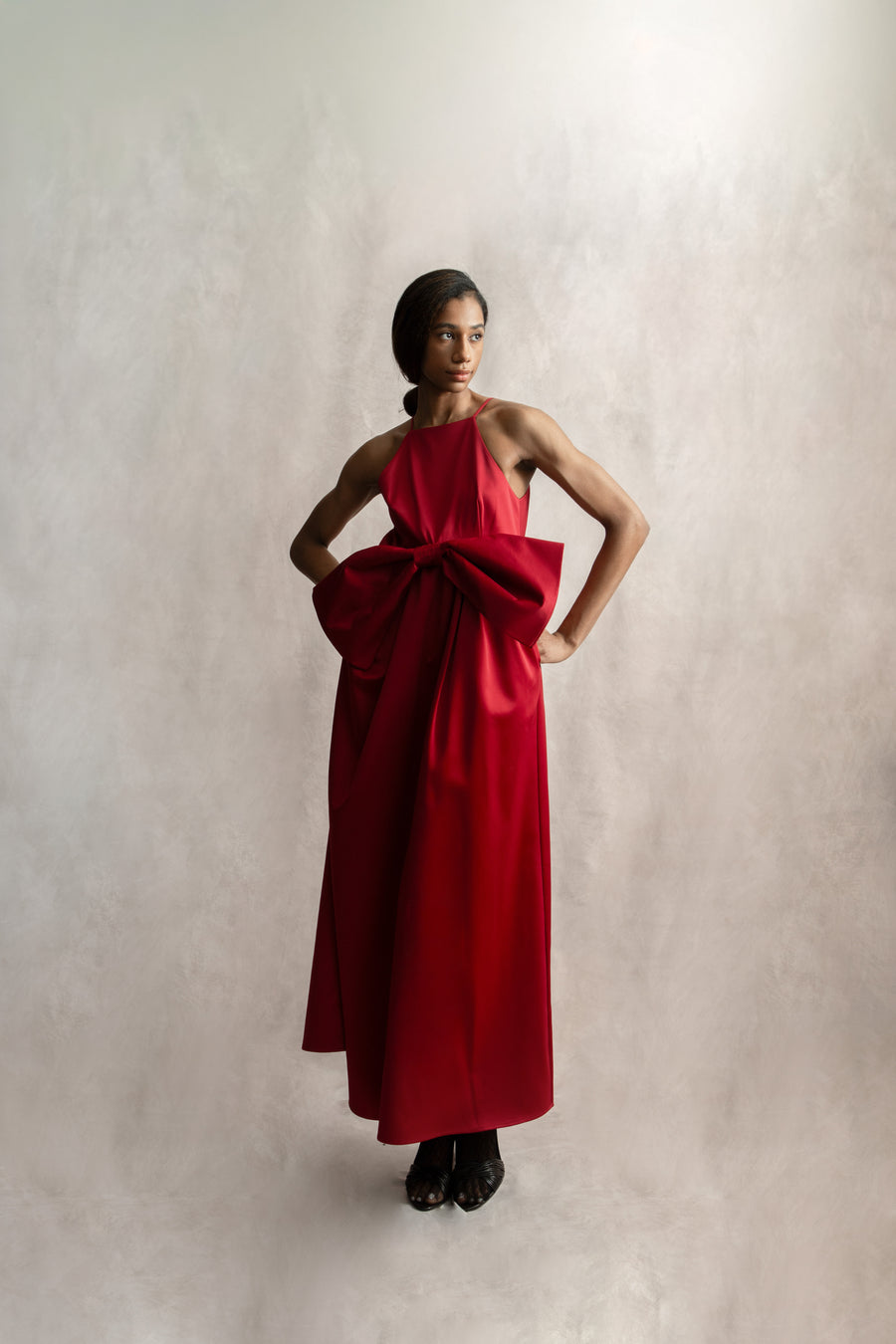
From our experience, achieving the perfect drape is a mathematical and artistic endeavor. The fabric must be manipulated to flow naturally, creating sculptural softness without adding bulk. Consider the dramatic elegance of our Square-Neck A-Line Dress with Oversized Bow - Scarlet. The vibrant color requires flawless draping to capture the light correctly, ensuring the silhouette remains powerful and commanding. Similarly, the Square-Neck A-Line Dress with Oversized Bow - Mist Blue uses careful tailoring to offer a delicate, ethereal aesthetic that still possesses the structure needed for a formal setting. When Evaluating the Quality of Luxury Clothing, observe how the garment falls when on the hanger, and more importantly, how it moves when worn.
6. Understanding Brand Philosophy and Production Restraint
Finally, Evaluating the Quality of Luxury Clothing extends beyond the physical garment to the ethos of the house that created it. True luxury is incompatible with mass overproduction. It demands time, skilled labor, and a commitment to excellence that cannot be rushed. A brand that practices deliberate restraint in its production volumes is inherently more focused on quality control and exclusivity.
At HER.I, our collections are produced in limited numbers and offered through select retail partners. This controlled approach allows us to maintain exacting standards of precision and craftsmanship. We design for meaningful settings, crafting pieces meant to be worn with intention and remembered long after the moment has passed. The Square-Neck A-Line Dress with Oversized Bow - Mimosa is a testament to this philosophy, embodying a quiet power that only comes from meticulous, small-batch production. We recommend that when Evaluating the Quality of Luxury Clothing, you consider the narrative of the brand, ensuring their production practices align with the true definition of luxury.
Summary Table for Evaluating the Quality of Luxury Clothing
To assist you in your future acquisitions, we have compiled the core principles of Evaluating the Quality of Luxury Clothing into a practical reference guide.
| Quality Indicator | What to Look For | What to Avoid |
|---|---|---|
| Fabric Composition | High percentage of natural fibers (silk, wool, cotton), sculptural softness, appropriate weight. | 100% cheap synthetics, static-prone materials, flimsy drape. |
| Stitching and Seams | High stitch density, enclosed French or bound seams, smooth interior finish. | Loose threads, low stitch count, exposed and messy overlocked edges. |
| Internal Construction | Floating linings (cupro/silk), proper chest canvassing, reinforced facings. | Glued fusing that bubbles, cheap acetate linings, lack of structural support. |
| Hardware | Horn, mother-of-pearl, or custom metal buttons. Smooth, locking zippers. | Flimsy plastic buttons, buckling zippers, loosely sewn fastenings. |
| Tailoring and Cut | Three-dimensional pattern drafting, strategic darts, bias cuts, silhouette memory. | Flat, boxy cuts, puckering at the seams, restricted movement. |
| Brand Production | Limited production runs, deliberate restraint, focus on lasting presence. | Mass production, fast fashion cycles, lack of exclusivity. |
Frequently Asked Questions
References
To further your understanding of textile science and garment construction, we recommend exploring the following authoritative resources:
- Federal Trade Commission (FTC). "Threading Your Way Through the Labeling Requirements Under the Textile and Wool Acts." Consumer Protection Guidelines. View Resource
- The Council of Fashion Designers of America (CFDA). Educational resources on sustainable production and luxury craftsmanship standards. View Resource
- Textile Society of America. Academic publications regarding historic and contemporary textile composition and structural analysis. View Resource


