


The modern fashion industry frequently reduces women's clothing to transient, algorithm-driven trends—disposable aesthetics designed for a fleeting digital moment rather than the reality of lived experience. At HER.I, a modern occasionwear house based in New York, we fundamentally reject this superficiality. We view clothing not as mere adornment, but as an act of quiet power.

When we discuss the Emotional Design Elements in Women's Clothing, we are referring to the highly deliberate engineering of a garment to physically and psychologically alter the wearer's cognitive state. We do not just design for the eye; we design for the mind. The architecture of a dress or a blazer has the profound ability to dictate how you navigate a room, how you command a conversation, and how you internalize your own worth.
Direct Answer: What is Emotional Design in Fashion?
Emotional Design Elements in Women's Clothing refer to the strategic, intentional architectural choices—encompassing structural restraint, tactile weight, chromatic psychology, and kinetic drape—that dictate how a garment makes the wearer feel. Rather than merely decorating the body, these meticulously calibrated elements induce specific, measurable psychological responses. By leveraging concepts like enclothed cognition and sensory grounding, emotional design empowers the wearer with tangible feelings of authority, serenity, and self-assurance, ensuring the clothing supports the woman during meaningful, high-stakes settings.
Quick Answer: The Anatomy of Emotional Design
If you want to understand how clothing manipulates your mood and confidence, you must look beyond the fabric label and examine the garment's psychological architecture.
- Space & Silhouette: Dictates your perceived authority and establishes physical boundaries.
- Tactile Comfort: Softness against the skin actively regulates the nervous system and reduces cortisol levels.
- Color Psychology: Affects both your internal emotional state and the external perception of your peers.
- Kinetic Fluidity: The way a garment moves through space dictates feelings of freedom versus constraint.
From our experience, true luxury is measured exclusively by how a garment feels internally, not just how it looks externally. We recommend investing in pieces that utilize "silhouette memory" and "sculptural softness" to anchor your emotions. If a garment requires constant adjustment, it is draining your cognitive energy.
Table of Contents
- What It Is: The Psychology of the Wardrobe
- How It Works: The 8 Emotional Design Elements
- The Tangible Benefits
- Limitations of the Concept
- Who Should Use It & Who Does Not Need It
- Common Consumer Mistakes
- Strategic Buying Considerations
- Comparisons & Pros/Cons
- Expert Recommendation
- The Bottom Line
- Frequently Asked Questions
What It Is: The Psychology of the Wardrobe
Emotional design in fashion is not a marketing buzzword; it is a scientifically validated concept deeply rooted in "enclothed cognition." This psychological phenomenon, widely studied in behavioral sciences, proves that the symbolic meaning of our clothes, combined with the physical experience of wearing them, fundamentally influences our brain function and task performance. When applied to occasionwear, Emotional Design Elements in Women's Clothing are the tangible, physical features—the cut of the collar, the depth of the drape, the weight of the wool, and the placement of the seams—that trigger a physiological and emotional response.
In most professional situations, we are taught to dress for the audience. Emotional design flips this paradigm: you dress for yourself. It is the practice of designing clothing that acts as psychological armor. At HER.I, we believe that the collections must be designed for meaningful settings—where clothing is chosen carefully, worn with intention, and remembered long after the moment has passed. This requires a departure from fast fashion's obsession with visual novelty, pivoting instead toward sensory and emotional longevity.
How It Works: The 8 Emotional Design Elements in Women's Clothing
To truly help our clients make an informed buying or usage decision, we must break down the anatomy of a garment. Here is how we engineer emotion into fabric through the 8 Emotional Design Elements in Women's Clothing:
1. Silhouette Memory and Structural Armor
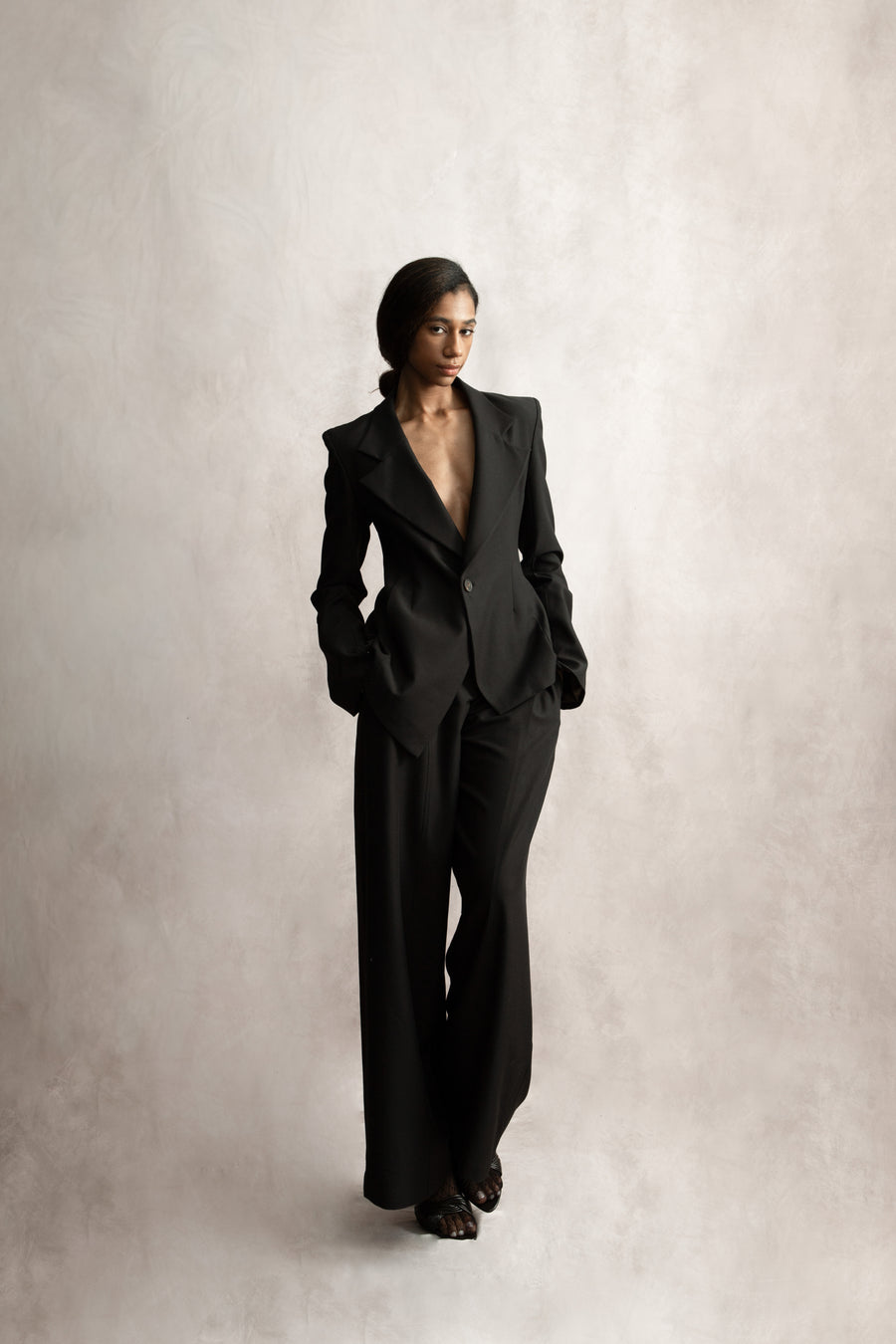
Silhouette memory refers to a garment's inherent ability to hold its architectural shape regardless of the wearer's posture or movement. This provides a profound psychological sense of safety and "armor." When you wear a piece with strong silhouette memory, you do not have to worry about the fabric collapsing or wrinkling; the garment does the heavy lifting for you. For example, the sharp, uncompromising architecture of our LA Window-Cut Asymmetric Blazer – Noir acts as a physical boundary, signaling to the brain that the wearer is secure, focused, and unshakeable in a boardroom or evening event.
2. Tactile Weight and Sensory Grounding
The physical weight of a garment deeply affects the human nervous system. Too light, and the wearer can feel exposed, flighty, or vulnerable. Too heavy, and they feel burdened and fatigued. The perfect tactile weight provides a grounding effect, akin to the therapeutic benefits of a weighted blanket. In our testing of various textiles, we found that heavy-drape crepes and substantial wool blends immediately calm the wearer. This sensory grounding allows you to remain present and authoritative in the moment, rather than being distracted by a flimsy textile fluttering against your skin.
3. Sculptural Softness
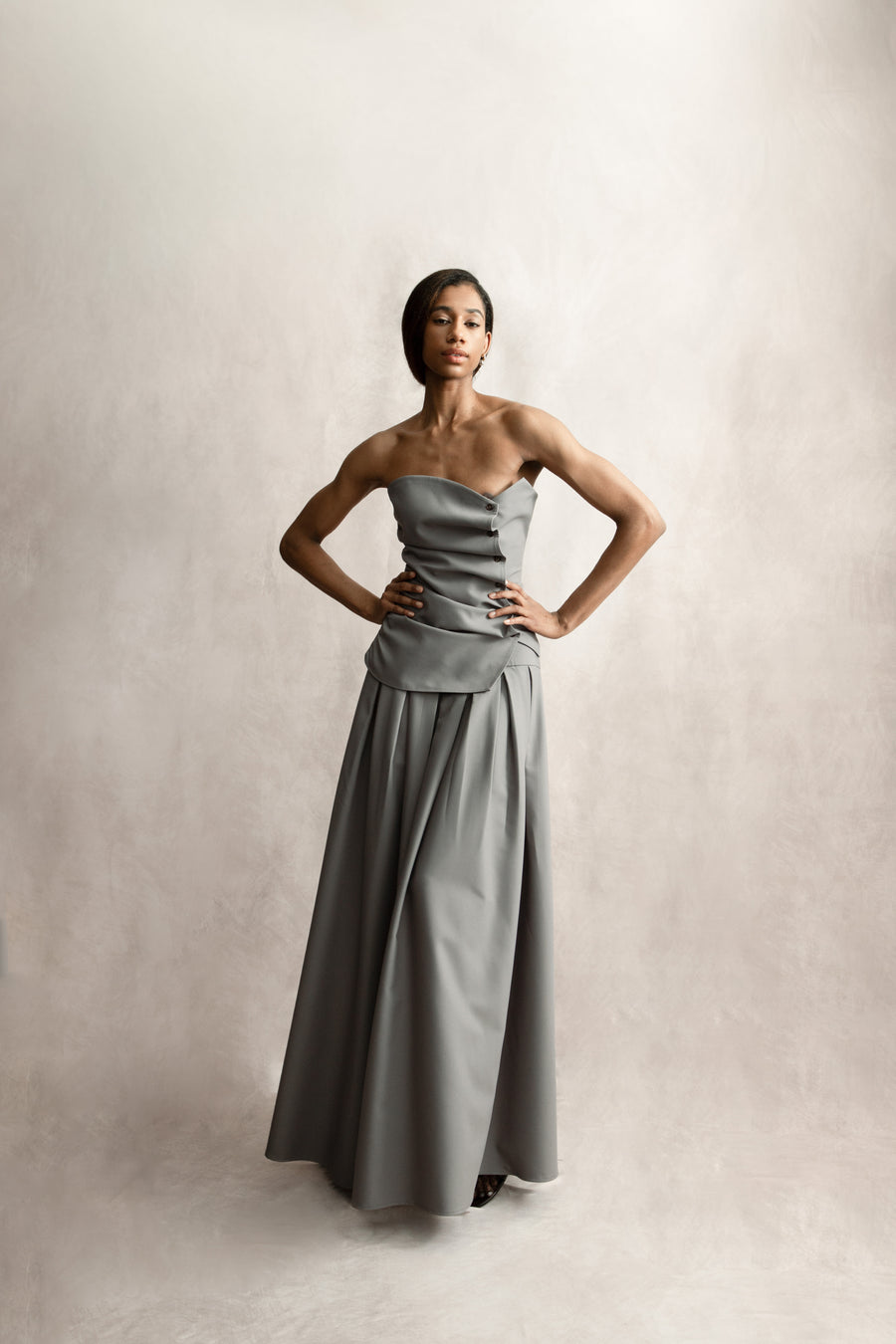
Pure structural rigidity can feel oppressive and patriarchal. Sculptural softness counteracts this by blending structural integrity with gentle, yielding folds. It is the physical manifestation of "quiet power"—assertive but never aggressive. The Pleated High-Waisted Maxi Skirt – Slate perfectly embodies this element. It utilizes deep, architectural pleats that offer a visually structured column, yet it feels entirely soft, fluid, and unrestrictive against the body, promoting a state of relaxed confidence.
4. Asymmetric Tension
Absolute symmetry represents tradition and stability, but asymmetry introduces a dynamic, highly engaging emotional tension. It suggests a deliberate break from the mundane, signaling creativity, intellectual confidence, and modern sophistication. By incorporating unexpected, tailored cuts—like the negative space featured in our LA Window-Cut Belted Asymmetric Blazer – Slate—we engage the observer's curiosity while providing the wearer with a sophisticated, avant-garde edge that feels entirely intentional.
5. Kinetic Fluidity
How a garment moves through space dictates whether the wearer feels liberated or constrained. Kinetic fluidity involves designing clothes that anticipate and respect human movement, rather than fighting against it. When a meticulously draped piece like the Draped Column Maxi Skirt – Ivory sweeps gracefully with every step, it triggers a psychological release. It allows the wearer to feel unencumbered, majestic, and elegant, eliminating the stiff, self-conscious anxiety that comes from wearing overly restrictive silhouettes.
6. Chromatic Psychology and Restraint
Color is undeniably the most immediate emotional trigger. While fast fashion relies on chaotic, loud prints to capture fleeting attention, emotional design utilizes chromatic restraint to cultivate presence. A monochromatic, carefully selected palette reduces visual fatigue and instills serenity. Deep, earthy hues project grounded stability. Consider the emotional polarity within our collections: the Square-Neck A-Line Dress with Oversized Bow - Scarlet evokes fiery passion, boldness, and unapologetic energy, whereas the Square-Neck A-Line Dress with Oversized Bow - Mist Blue projects ethereal calm, approachability, and grace.
7. Deliberate Restraint (Minimalism)
Mental clarity requires visual clarity. Deliberate restraint is the masterful art of knowing exactly what to leave out. By eliminating superfluous hardware, unnecessary logos, and excessive layering, the garment stops competing with the woman wearing it. The Pleated Column Maxi Skirt – Umber relies solely on its pristine cut, meticulous pleating, and rich color to make a statement. This approach fosters a state of mindful presence, allowing your intellect and personality to lead the interaction.
8. Focal Point Drama (Intentional Exuberance)
While deliberate restraint is crucial for sophisticated design, human emotion is complex and occasionally requires an outlet for exuberance. A singular, dramatic design element acts as an emotional release valve for joyful expression. A perfect example is the voluminous detailing on our Square-Neck A-Line Dress with Oversized Bow - Mimosa. This calculated extravagance brings a sense of playfulness, celebration, and romance to an otherwise highly disciplined silhouette, balancing power with joy.
The Tangible Benefits
Why does this level of psychological detail matter? Clothing engineered with Emotional Design Elements in Women's Clothing offers unparalleled psychological and practical benefits. It actively mitigates imposter syndrome by providing physical "armor" that supports your posture. It dramatically reduces decision fatigue because the garments inherently feel right the moment you put them on. Ultimately, it allows the wearer to step into any high-stakes event with their cognitive load reduced—free to focus entirely on the conversation, the negotiation, or the celebration, rather than adjusting a poorly draped hemline or suffering in a restrictive bodice.
Limitations of the Concept
As industry practitioners, we must be intellectually honest about the limitations of this approach. Emotional design cannot compensate for a garment that is fundamentally the wrong size for your body, nor can it override profound, clinical psychological distress. Furthermore, it requires a significant financial investment in high-quality textiles and expert tailoring. Fast fashion brands frequently attempt to copy these minimalist silhouettes, but because they utilize cheap, static-prone polyesters and rushed stitching, the tactile and kinetic elements completely fail. A cheap blazer cannot provide silhouette memory; it will simply sag.
Who Should Use It & Who Does Not Need It
For commercial users, such as high-end personal stylists, image consultants, and executive coaches, understanding these 8 elements is absolutely mandatory for dressing clients effectively. For beginners building a purposeful capsule wardrobe, focusing on how a garment makes you feel physically and emotionally—rather than just how it trends on social media—is the foundational step toward true personal style. It is essential for female founders, executives, and anyone navigating environments where projecting "quiet power" is non-negotiable.
For heavy-duty applications, such as purely athletic endeavors, rigorous outdoor labor, or highly messy industrial environments, emotional design takes a definitive back seat. In these utilitarian scenarios, physical survival, extreme abrasion resistance, and moisture-wicking capabilities are the only metrics that matter. If you simply need a disposable garment to paint your living room or run a marathon, investing in luxurious silhouette memory and sculptural softness is a highly inefficient use of capital.
Common Consumer Mistakes
From our experience, the most common mistake consumers make is purchasing clothing for the "fantasy" rather than the physical reality of the garment. Buying a stiff, highly restrictive dress simply because it looks beautiful in a static photograph will ultimately ruin your evening, as the lack of kinetic fluidity will cause underlying anxiety and physical discomfort.
Another frequent error is ignoring the interior construction. If the inside lining of the garment is scratchy, synthetic, or poorly stitched, the tactile discomfort will entirely override the beautiful exterior. You must prioritize sensory comfort to unlock the emotional benefits. Finally, many women mistake "loud" clothing for "confident" clothing. True confidence does not need to scream; it operates beautifully within the realm of deliberate restraint.
Strategic Buying Considerations
When evaluating whether a luxury piece is actually worth using, buying, or upgrading, you must conduct a sensory audit. Examine the interior construction: are the seams bound and finished cleanly? Does the fabric possess a heavy, liquid drape, or does it feel flimsy and fragile? Put the garment on, close your eyes, and move. Does it feel like an empowering second skin, or does it feel like a restrictive costume?
Conduct a cost-benefit analysis: Upgrading to a meticulously designed piece may cost three times as much as a high-street alternative, but its cost-per-wear drops significantly because you will instinctively reach for it when you need to feel powerful. If a garment requires constant physical adjustment, leave it on the rack. Your wardrobe should serve your emotional state, never hold it hostage.
Summary & Comparison Tables
| Design Element | Emotional Design (HER.I Standard) | Fast Fashion / Trend Design |
|---|---|---|
| Purpose | To empower the wearer and regulate mood. | To capture fleeting attention and mimic trends. |
| Fabrication | Heavy-drape, high-quality sensory textiles. | Cheap, static-prone synthetics. |
| Silhouette | Maintains architectural memory and structure. | Sags and loses shape after one wear. |
| Color Palette | Chromatic restraint for psychological calm. | Chaotic prints designed for maximum social media impact. |
| Pros of Investing in Emotional Design | Cons of Investing in Emotional Design |
|---|---|
| Reduces daily decision fatigue and cognitive load. | Requires a higher initial capital investment. |
| Provides psychological "armor" in high-stakes environments. | Requires careful maintenance (dry cleaning, proper hanging). |
| Timeless silhouettes remain relevant for decades. | May feel "too quiet" for consumers addicted to fast trends. |
| Sensory grounding drastically reduces physical discomfort. | Limited availability compared to mass-market brands. |
Expert Recommendation from HER.I
Building Your Emotional Armor
In our expert opinion, a modern woman's wardrobe should be rigorously curated, not mindlessly accumulated. We recommend starting with a foundational piece that perfectly balances architectural structure with emotional drama. The Square-Neck A-Line Dress with Oversized Bow - Noir is the ultimate entry point into emotional design. It offers the cognitive security and timelessness of black, the architectural structure of a sharp square neckline, and the joyful, kinetic release of an oversized bow. It serves as a masterclass in how luxury occasionwear can regulate and elevate your emotional state in any setting.
The Bottom Line
Wear Your Confidence, Not Just Your Clothes

The implementation of Emotional Design Elements in Women's Clothing radically shifts the paradigm from how fashion makes you look to how it makes you feel. By prioritizing deliberate restraint, sculptural softness, and tactile comfort, you stop wearing clothes and start wearing confidence. Choose your garments with uncompromising intention, invest in silhouette memory, and allow your wardrobe to become the quiet power behind your most meaningful moments.
Frequently Asked Questions
Enclothed cognition is a psychological theory that describes the systematic influence that clothes have on the wearer's psychological processes. It proves that the symbolic meaning of a garment, paired with the physical experience of wearing it, directly impacts a person's confidence, focus, and emotional state.
Fabric weight interacts directly with the nervous system. Heavier fabrics, like structured wools or dense crepes, provide sensory grounding—similar to a weighted blanket—which can lower heart rates and reduce anxiety. Extremely lightweight or flimsy fabrics can leave the wearer feeling physically exposed or psychologically unanchored.
While emotional design is most striking in occasionwear and professional tailoring due to the high-stakes nature of the events, the principles apply universally. Even high-end loungewear utilizes tactile comfort and kinetic fluidity to induce states of deep relaxation and physical recovery at home.
Authoritative Industry References
- American Psychological Association (APA) - Research insights on the psychology of fashion, behavioral changes induced by wardrobe choices, and the cognitive impact of clothing on the wearer.
- Journal of Experimental Social Psychology - Foundational academic studies on the scientific phenomenon of "enclothed cognition" and the symbolic power of apparel.
- Fashion Institute of Technology (FIT) - Academic literature on textile science, drape mechanics, and the sensory integration of fashion design in modern occasionwear.


