


True elegance is rarely an accident. Behind every exquisite drape, structured shoulder, and flawlessly finished hem lies a meticulous architecture of design. Understanding how high-end dresses are constructed separates transient fashion trends from enduring, investment-worthy occasionwear. At HER.I, we believe that the soul of a garment resides in its internal framework—the unseen stitches, the precise bias cuts, and the tailored canvassing that grant a piece its sculptural softness. It is not merely about selecting beautiful fabric; it is about engineering that fabric to interact harmoniously with the human form against the forces of gravity.

Quick Answer
How high-end dresses are constructed fundamentally dictates their longevity, fit, and visual impact. Unlike mass-market garments that are rapidly serged together, luxury dresses are built from the inside out using traditional couture sewing methods. They rely on internal structuring elements like natural fiber underlining (such as silk organza), sew-in interfacings, and waist stays to maintain what we call silhouette memory. The seams are densely stitched (typically 12-16 stitches per inch) and meticulously finished by hand or with French seams. Hand-picked zippers and floating natural-fiber linings are standard practice. In most professional situations, prioritizing these structural details guarantees a garment that flatters the body flawlessly and is entirely worth the premium investment, as it will withstand decades of wear and tailoring.
Navigating the Architecture
- What It Is: The Definition of Couture-Level Construction
- How It Works: The Internal Blueprint
- The Benefits of Structural Integrity
- Limitations of Luxury Garment Construction
- Who Should Invest in High-End Dresses
- Who Does Not Need This Level of Craftsmanship
- Common Mistakes When Evaluating Garment Quality
- Buying Considerations for Discerning Clients
- Expert Recommendation from HER.I
- Essential Data and Comparison Tables
- The Bottom Line
- Frequently Asked Questions
What It Is: The Definition of Couture-Level Construction
When you ask how high-end dresses are constructed, you are inquiring about a centuries-old tradition of sartorial engineering. It is the application of deliberate restraint and mathematical precision to textile manipulation. A high-end dress is not merely fabric cut and quickly sewn together; it is a three-dimensional sculpture. The construction process emphasizes meticulous craftsmanship over production speed.
From our experience, the visual discrepancy between a luxury gown and a fast-fashion replica is entirely rooted in how high-end dresses are constructed internally. Fast fashion relies on fusible (glued) interfacings, overlocked raw edges, and synthetic linings that trap heat. High-end construction treats the inside of the garment with the exact same reverence as the outside. Every seam, dart, and closure is engineered to provide support, shape, and durability without compromising the fluidity of the outer fabric.
How It Works: The Internal Blueprint

The methodology of how high-end dresses are constructed is rigorously phased. It is an orchestration of hand-stitching, precise pressing, and layered support systems.
The Toile and Pattern Perfecting
Before shears ever touch expensive silk or virgin wool, a prototype known as a toile or muslin is drafted. This allows the atelier to perfect the fit, test the drape, and adjust the proportions. Only when the toile achieves sculptural perfection is the actual fashion fabric cut.
Underlining and Internal Architecture
In examining how high-end dresses are constructed, one must look at the underlining. Rather than simply sewing a lining into a dress, high-end makers cut a secondary fabric—often silk organza or silk habotai—matching the exact pattern pieces of the outer fabric. These layers are hand-basted together and treated as one. This underlining catches blind hem stitches so they remain invisible on the outside, prevents delicate fabrics from wrinkling, and provides a foundation that stops the dress from sagging over time. For heavily structured bodices, spiral steel boning or horsehair braid may be hand-stitched into the underlining to create an unyielding yet comfortable shape.
Seam Finishes and Stitch Density
In our testing of seam integrity across various manufacturing tiers, we see that how high-end dresses are constructed relies heavily on stitch density. While standard apparel uses a loose 8-10 stitches per inch to save time, high-end garments feature a dense 12-16 stitches per inch, preventing seams from pulling apart under tension. Raw edges are never left exposed or simply serged. They are meticulously finished with French seams, bound with bias tape (a Hong Kong finish), or hand-overcast to prevent fraying.
The Art of the Closure and Hem
Zippers in high-end occasionwear are frequently "hand-picked." Instead of running a sewing machine down the zipper tape, an artisan uses a delicate prick-stitch by hand. This allows the zipper to flex perfectly with the fabric and makes the insertion practically invisible. Hems are deeply turned and catch-stitched by hand so that the needle catches only a single thread of the outer fabric. A proper high-end hem moves beautifully and leaves no visible ridge.
The Benefits of Structural Integrity
The benefits of understanding how high-end dresses are constructed become apparent the moment the garment is slipped over the shoulders. The primary advantage is silhouette memory. A dress constructed with proper underpinnings, such as an internal grosgrain waist stay, will retain its shape perfectly, draping beautifully around the wearer and never collapsing after hours of wear. The exclusive use of natural fiber linings, such as silk or cupro, ensures breathability and comfort, functioning as a second skin. Furthermore, because how high-end dresses are constructed involves generous seam allowances (often an inch or more), these garments can be expertly altered, expanded, or tailored multiple times, ensuring they adapt to the wearer's changing body over decades.
Limitations of Luxury Garment Construction
There are, inherently, limitations to this level of craftsmanship. The techniques defining how high-end dresses are constructed are incredibly labor-intensive. A masterfully tailored bodice may require upwards of 60 to 80 hours of artisan labor, which drives the retail cost significantly higher than mass-produced clothing. Additionally, the delicate hand-stitching, natural fibers, and structural canvassing mandate specialized dry cleaning and careful storage. For heavy-duty applications or environments where clothing is subjected to intense wear and tear without the possibility of careful maintenance, this level of construction can prove overly fragile and impractical.
Who Should Invest in High-End Dresses
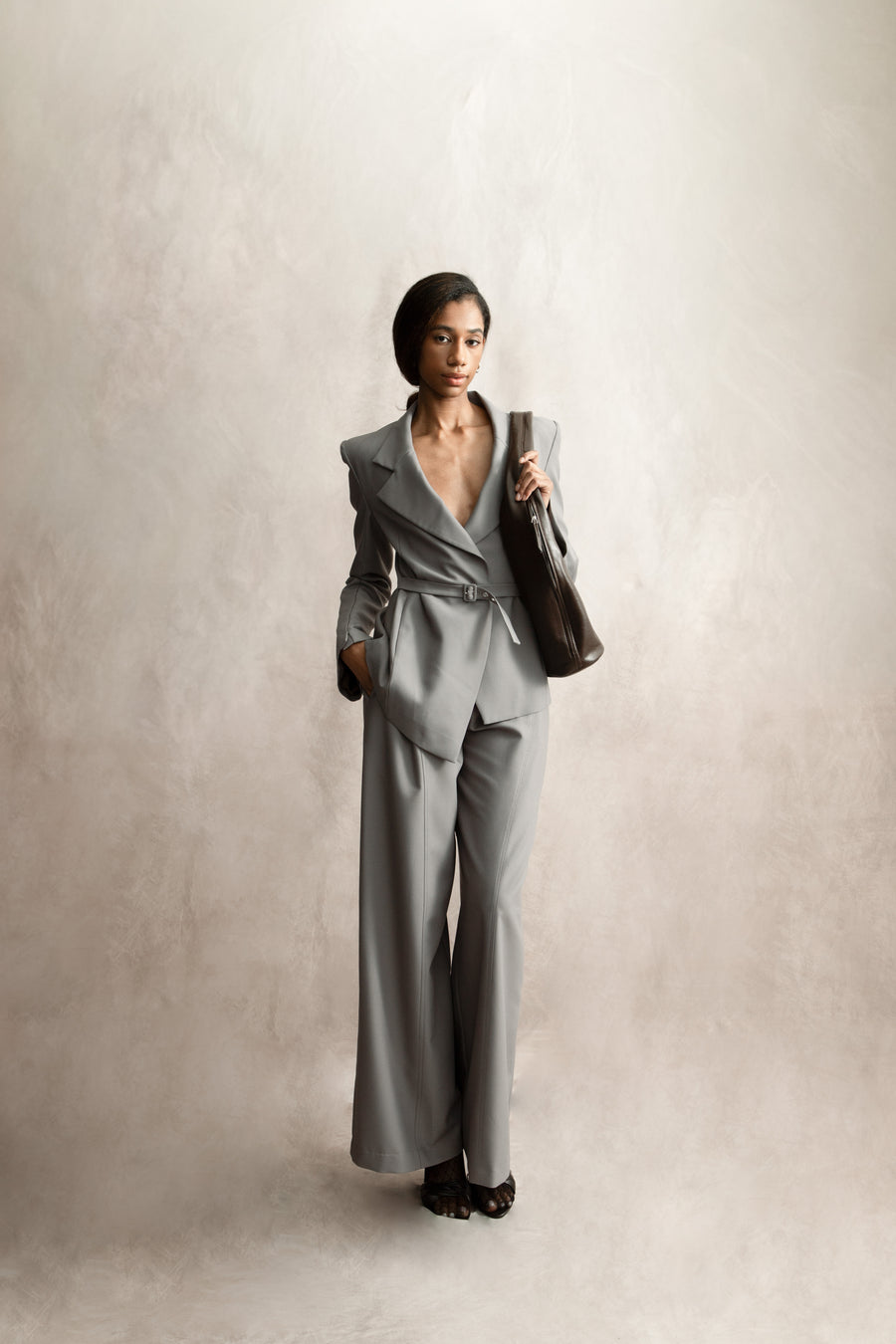
For commercial users, elite stylists, and women navigating high-stakes professional or formal environments, investing in garments built this way is a strategic necessity. Whether you are commanding a boardroom in our LA Window-Cut Belted Asymmetric Blazer – Slate or attending a gala in a meticulously draped gown, the internal architecture communicates silent authority. Discerning clients who value quality over quantity, and who view their wardrobe as a curated collection of wearable art, will find that upgrading to this tier of clothing is a life-changing sartorial decision.
Who Does Not Need This Level of Craftsmanship
For beginners who are still experimenting with their personal style and frequently cycle through fast-fashion trends, investing in the meticulous methods of how high-end dresses are constructed may not yield a strong return on investment. If a garment is only intended to be worn for a single season or a specific fleeting trend, the hidden architecture of a French seam, a hand-rolled hem, or pad-stitched lapels is an unnecessary and unjustifiable expense.
Common Mistakes When Evaluating Garment Quality
One of the most prevalent errors consumers make is conflating a famous brand logo with superior construction. A high price tag does not automatically guarantee couture methods. If you want to know how high-end dresses are constructed, you must look inside the garment. A common mistake is accepting garments with unattached, cheap polyester linings or exposed, serged seams simply because of the designer label on the collar. If a luxury-priced dress features fused (glued) interfacing that bubbles after dry cleaning, you are paying for marketing, not craftsmanship.
Another mistake is assuming that technical or synthetic fabrics cannot be high-end. High-quality, advanced technical fabrics can be expertly draped and finished with couture techniques, as perfectly demonstrated in our Draped Wrap Column Skirt – Noir, which utilizes precision tailoring to create sculptural softness.
Buying Considerations for Discerning Clients
When assessing how high-end dresses are constructed, turn the garment inside out. Inspect the seam allowances; a true high-end piece will offer generous fabric reserves at the seams to allow for future tailoring. Check the zipper insertion: is it cleanly finished, perhaps hand-picked, with a hook-and-eye closure at the top to reduce mechanical stress on the zipper teeth? Evaluate the hem; a luxury dress will feature a blind hem, often finished by hand, allowing the fabric to fall heavily and smoothly without a rigid, machine-stitched line showing on the exterior. Feel the fabric—if the dress has structure, gently bend the collar or bodice to see if the interfacing feels like sewn-in canvas or stiff, cheap glue.
Expert Recommendation from HER.I
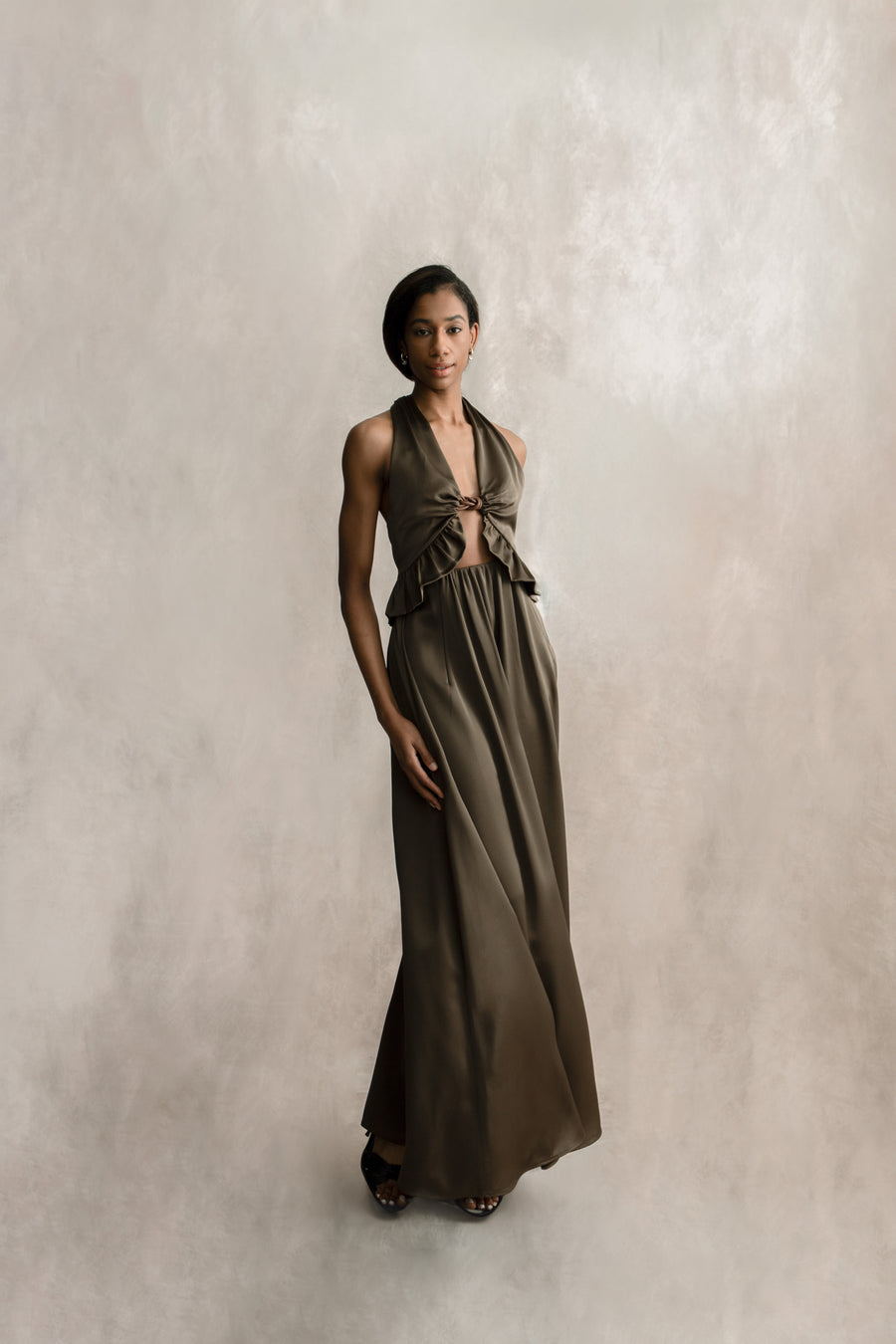
We recommend that every woman owns at least one impeccably constructed foundational dress or tailored separate. From our experience, the psychological confidence derived from wearing a piece that has been architecturally engineered to flatter your form is unparalleled. At HER.I, our design philosophy revolves around deliberate restraint. We focus intensely on how high-end dresses are constructed, ensuring that pieces like our High-Waisted Voluminous Wide-Leg Trousers – Noir and the Pleated Column Maxi Skirt – Umber possess the profound structural integrity necessary to act as conduits of quiet power. We advise our clients to completely ignore fleeting embellishments and instead prioritize silhouette memory, internal canvassing, and flawless drape.
Essential Data and Comparison Tables
| Construction Element | High-End Execution | Purpose / Benefit |
|---|---|---|
| Underlining | Silk organza hand-basted to the fashion fabric. | Provides structure, catches hem stitches, prevents wrinkling. |
| Seam Finishes | French seams, bias-bound (Hong Kong), or hand-overcast. | Prevents fraying, ensures interior is beautiful and comfortable against skin. |
| Interfacing | Natural fibers (horsehair, canvas) sewn in by hand. | Maintains shape and silhouette memory without bubbling or stiffness. |
| Stitch Density | 12 to 16 stitches per inch. | Maximum seam durability and precision. |
| Lining | 100% Silk, Cupro, or Bemberg; often cut with extra ease. | Breathability, luxury feel, allows the outer garment to drape independently. |
| Feature | High-End / Couture Construction | Mass Market / Fast Fashion |
|---|---|---|
| Pattern Prototyping | Fitted using a muslin/toile on a mannequin. | Digital patterns sent directly to cutting machines. |
| Hem Execution | Deep hems (2-3 inches), hand-stitched (catch stitch). | Narrow hems (1/2 inch), rapidly machine top-stitched. |
| Seam Allowance | Generous (1 inch+), allowing for bespoke alterations. | Minimal (1/4 to 3/8 inch), impossible to let out. |
| Zippers | Hand-picked with silk thread for flexibility. | Machine-stitched visible or invisible zippers. |
| Pros (Advantages) | Cons (Limitations) |
|---|---|
| Garment retains perfect silhouette memory for decades. | Significantly higher initial purchase price. |
| Natural linings provide superior thermal regulation and comfort. | Requires specialized, expensive dry cleaning. |
| Generous seam allowances allow for precise body tailoring over time. | Hand-stitched elements can be delicate under heavy abrasion. |
| Invisible hand-finishing creates a flawless exterior aesthetic. | Not suitable for casual, disposable trend cycles. |
| What to Inspect | Look For (Pass) | Walk Away (Fail) |
|---|---|---|
| The Inside Seams | Edges bound with bias tape or fully encased French seams. | Messy, loopy serger/overlock stitches with loose threads. |
| The Fabric Drape | Moves fluidly; lapels or collars snap back into shape gracefully. | Feels stiff, cardboard-like, or shows puckering near seams. |
| The Lining Attachment | Floats freely at the hem, attached loosely with thread chains (French tacks). | Sewn tightly to the outer hem, causing the dress to pull or bubble. |
The Bottom Line
The reality of how high-end dresses are constructed is a profound testament to the enduring value of artisanal craftsmanship and garment engineering. True luxury is entirely hidden in the details—the sew-in interfacings, the densely packed stitches, the tailored waist stays, and the invisible hand-finished hems. While the initial capital investment for such pieces is undeniably higher, the cost-per-wear of a properly engineered garment will exponentially outlast its mass-market counterparts. By educating yourself on these structural hallmarks, you empower yourself to make wardrobe decisions based on genuine quality rather than brand marketing. Investing in dresses and tailoring from houses like HER.I, such as our High-Waisted Wide Leg Tailored Trousers – Slate or the Draped Column Maxi Skirt – Ivory, ensures your clothing serves as a lasting, architectural extension of your personal power.
Frequently Asked Questions
An underlining is a layer of fabric (often silk organza or cotton batiste) that is cut to the exact shape of the main fashion fabric and basted to its wrong side before the garment is assembled. It acts as a structural foundation, giving flimsy fabrics body, preventing wrinkles, and providing a safe layer to anchor hand-stitched hems without the thread showing on the exterior of the dress.
High-end dresses use natural linings like silk, cupro, or Bemberg because they are highly breathable, anti-static, and regulate body temperature beautifully. Cheap polyester linings, commonly found in mass-market clothing, act like plastic wrap—trapping heat, causing perspiration, and causing the dress to cling awkwardly to the body.
In the realm of luxury garment construction, a high stitch density is a hallmark of quality. Standard, fast-fashion apparel typically utilizes 8 to 10 stitches per inch to speed up the manufacturing process. Conversely, high-end and couture garments are sewn with 12 to 16 stitches per inch, which ensures much stronger, flatter, and more precise seams that will not burst under tension.
1. The Metropolitan Museum of Art: Haute Couture: The History and Techniques of Custom Dressmaking
2. Threads Magazine: Couture Sewing Techniques and Internal Garment Architecture
3. Vogue Business: The Hidden Craftsmanship and Engineering Behind Luxury Fashion


