


The future of slow fashion luxury is not about selling less and hoping the market forgives you. It is about building garments that justify their place in a wardrobe through design discipline, material integrity, and emotional longevity. From our experience, the brands that will matter most in the next few years are the ones that stop chasing novelty for its own sake and start proving that a smaller wardrobe can still feel richer, sharper, and more powerful. McKinsey’s latest luxury outlook points to a sector moving away from price-led growth and back toward creativity, craftsmanship, and client trust, while the EU and Ellen MacArthur Foundation both point in the same direction: longer use, circularity, and less waste.

the future of slow fashion luxury belongs to brands that treat clothing as an investment in wearability, not a seasonal impulse. The winning formula is fewer pieces, better construction, stronger storytelling, and clearer proof of value. For HER.I, that means leaning into sculptural silhouettes, occasion-ready restraint, and pieces designed to be remembered rather than replaced. In most professional situations, that is a better long-term strategy than trend-chasing or discount-driven growth.
Direct answer: what the future actually looks like
The future of slow fashion luxury will be defined by three shifts. First, luxury customers will keep demanding clearer value, which means craftsmanship, finish quality, and design restraint will matter more than hype. Second, sustainability will move from a nice brand story to a procurement and compliance issue, especially as textile policy tightens and circular business models become more normal. Third, brands will need to design garments that hold meaning after the first wear, because the new luxury is not only how something looks when you buy it, but how often you reach for it later.
That is why HER.I’s positioning makes sense. A modern occasionwear house based in New York, HER.I explores clothing as an act of quiet power, which is exactly the point. Slow fashion luxury is no longer about being loud. It is about being deliberate. For commercial users building a brand in this space, the real question is not “How do we create more product?” It is “How do we create garments people keep choosing?”
Table of contents
Quick Summary Table
| What you are evaluating | What it means | Why it matters | Decision signal |
|---|---|---|---|
| Slow fashion luxury | Luxury built around longevity, restraint, and repeat wear. | It reduces dependency on trend churn and makes the wardrobe feel more intentional. | Worth backing if the product has real staying power. |
| Craftsmanship | Construction, finishing, fabric quality, fit, and detailing. | It is the first thing customers feel and the last thing they forget. | Non-negotiable. |
| Circularity | Repair, resale, reuse, and lower-waste product design. | Policy pressure and consumer expectations are moving in this direction. | Becoming mandatory, not optional. |
| Quiet design | Intentional silhouettes that do not depend on trend noise. | It gives garments longer commercial life. | Strong fit for HER.I. |
| Short-lived statement dressing | High-impact pieces with a narrow wear window. | Useful for a moment, weak for long-term luxury building. | Use sparingly. |
What slow fashion luxury is
Slow fashion luxury is the part of the luxury market that values permanence over churn. It does not reject fashion; it rejects wasteful fashion logic. The category favors garments that are made carefully, styled intentionally, and worn enough times to justify the investment. In practical terms, that means better fabric selection, cleaner construction, more disciplined collections, and a stronger relationship between the brand and the customer.
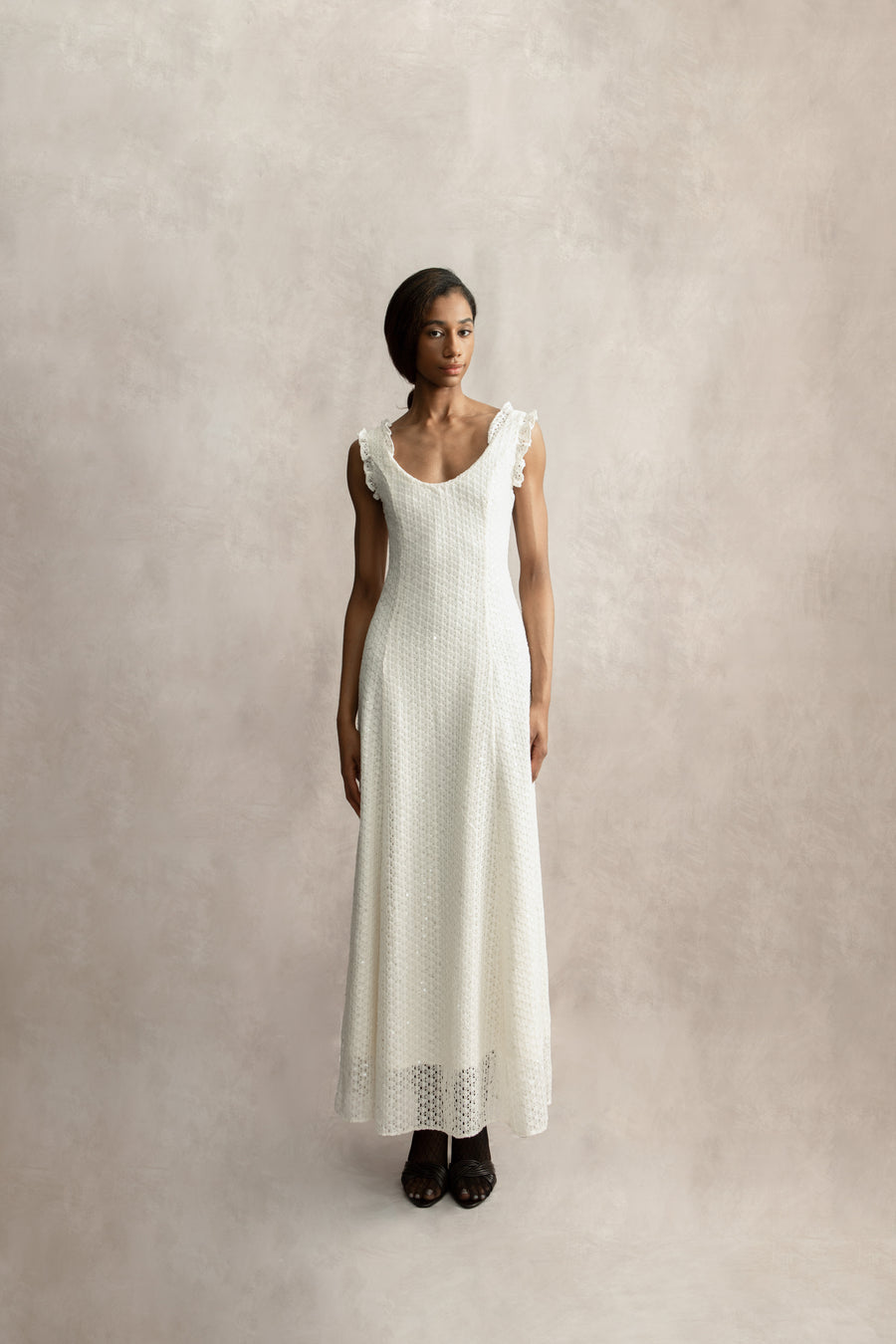
It is a better fit for buyers who want clothing to work hard in their wardrobe. That can mean a pearl-embellished gown for a formal calendar, a sharply cut graphite dress for a private event, or an ivory sequin piece that still feels relevant years later. HER.I’s Pointelle Knit Sequin Maxi Dress – Ivory and Pearl-Embellished Lace Maxi Dress – Ivory fit this logic well because they read as occasion pieces without feeling disposable. That is the sweet spot slow fashion luxury is moving toward.
In our view, the biggest misconception is that slow fashion luxury must look minimal or plain. It does not. It can be embellished, sensual, sculptural, and dramatic. The difference is that the drama is earned through design, not manufactured through noise.
How it works in practice
Slow fashion luxury works when the brand controls the things that matter most over time: material quality, silhouette longevity, fit consistency, and customer trust. McKinsey’s recent luxury reporting describes the sector as recalibrating around creativity, craftsmanship, and client experience rather than relying on price increases alone. That matters because customers are no longer impressed by price as a substitute for value. They want to feel the garment earned its cost.
For design teams, the process usually looks like this. You design fewer styles. You refine the fit more carefully. You choose materials that carry the garment through multiple wears, not just the first photoshoot. You build a collection that can be styled in several directions. And you keep the assortment tight enough that each piece gets room to breathe.
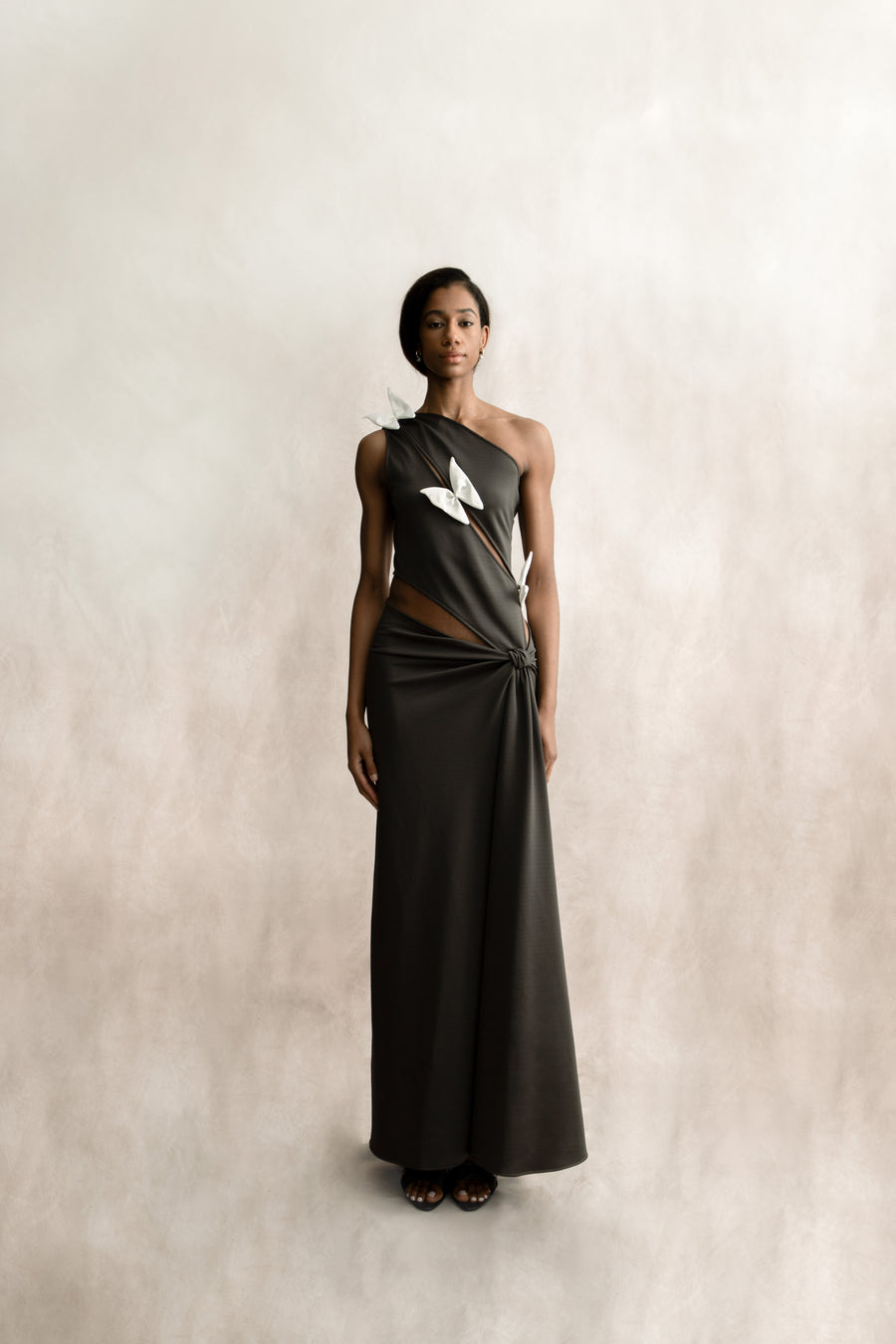
For HER.I, that approach maps naturally to the brand’s identity. Quiet power is not a slogan here; it is a commercial positioning choice. Dresses such as the One-Shoulder Low-Rise Draped Dress - Graphite, the One-Shoulder Low-Rise Draped Dress – Taupe, and the High-Neck Low-Rise Draped Wrap Dress - Graphite are not just products. They are examples of how slow fashion luxury should behave: selective, distinctive, and wearable beyond one event.
Comparison Table: slow fashion luxury versus fast luxury versus timeless occasionwear
| Model | How it sells | Strength | Weakness | Best for |
|---|---|---|---|---|
| Slow fashion luxury | Fewer pieces, higher intent, longer use. | Builds trust and wardrobe loyalty. | Needs strong design discipline and patience. | Brands that want lasting desirability. |
| Fast luxury | Frequent novelty with premium pricing. | Can generate attention quickly. | Usually weak on longevity and authenticity. | Short-term demand capture. |
| Timeless occasionwear | Event-ready pieces with repeat-wear potential. | Clear use case and easier styling logic. | Can become conservative if not edited well. | Brands like HER.I that trade on sculptural restraint. |
| Trend-led premium | Looks current, sells fast, moves on fast. | Good for volume spikes. | Weak brand memory. | Not ideal for long-term luxury equity. |
Why this direction matters now
The luxury market is in a reset phase. McKinsey notes that brands are moving away from price-led growth and back toward creativity and craftsmanship to rebuild client trust. At the same time, the European Commission’s textiles strategy is explicitly pushing the market toward sustainable and circular textiles, reuse, and reduced fast-fashion pressure. The Ellen MacArthur Foundation’s fashion work is even more direct: fashion needs to shift toward products and business models that keep clothing in use for longer.
That combination matters for slow fashion luxury because it changes what “premium” has to mean. Premium is no longer just the price tag, the branding, or the runway cue. Premium has to include durability, lower-waste thinking, and a product story that still makes sense when the customer wears the piece for the fifth or tenth time. In most professional situations, that is where brand strength lives now.
It also changes how customers buy. People are becoming more selective. They want fewer purchases that do more work. They want pieces that justify their space. That is why products like High-Neck Low-Rise Draped Wrap Dress – Taupe and High-Neck Fitted Tulip Appliqué Dress - Graphite are relevant to the conversation: they offer presence, but they also carry a degree of wardrobe longevity that trend-only products often lack.
Pros vs Cons Table
Pros
- Creates stronger brand memory than trend-heavy fashion.
- Supports higher perceived value when quality is real.
- Reduces the pressure to overproduce.
- Fits growing sustainability and circularity expectations.
- Works well for brands with a clear point of view, like HER.I.
Cons
- Requires better design judgment than trend-led models.
- Can be slower to scale if the collection is too controlled.
- Needs tighter fit, fabric, and finishing standards.
- Will not rescue weak products with a good sustainability story.
- Can be misunderstood by brands that confuse “slow” with “basic.”
Buying Guide Table: what to prioritize when choosing slow fashion luxury pieces
| What to look for | Why it matters | Good sign | Bad sign |
|---|---|---|---|
| Construction quality | It determines whether the garment still looks good after repeat wear. | Clean seams, stable structure, thoughtful finishing. | Pretty on the hanger, weak in motion. |
| Fabric choice | The fabric decides drape, comfort, and longevity. | Material with enough body and recovery for real use. | Fabric that only photographs well. |
| Silhouette memory | Strong shapes stay relevant longer than trend gimmicks. | Garments that are recognizable without being loud. | Designs that depend on novelty to feel interesting. |
| Styling versatility | Luxury should work across more than one occasion. | Can be worn with different shoes, bags, and outerwear. | One-and-done event wear. |
| Brand story | Customers want the reason behind the price. | Clear point of view and disciplined edit. | Generic “sustainable luxury” language. |
What kinds of HER.I pieces fit the future best
The future of slow fashion luxury is not built on a product flood. It is built on a handful of pieces that a customer can imagine wearing again and again. HER.I is well positioned for this because the brand already works in a language of restraint, sculptural softness, and silhouette memory.
Pieces like the High-Neck Fitted Tulip Appliqué Dress - Slate, the High-Neck Fitted Tulip Appliqué Dress – Taupe, and the One-Shoulder Low-Rise Draped Dress - Graphite all point in the right direction because they are specific without being fragile from a styling standpoint. That is what the best slow luxury pieces do: they keep their identity while still fitting into a real wardrobe.
Commercially, this matters because it makes repeat purchase more realistic. A customer who buys one excellent dress is more likely to come back for another if the first one becomes part of her rotation, not just a memory from one event. That is the real lifetime value argument behind slow fashion luxury.
Who should use slow fashion luxury, and who does not need it
Use it if your brand has a strong design point of view, a smaller but more intentional assortment, and customers who care about how a garment feels, fits, and lasts. It is also the right approach if your business wants to build emotional loyalty instead of chasing constant traffic spikes.
You do not need it if your business model depends on speed, constant novelty, or low-margin volume. In those cases, slow fashion luxury will feel too disciplined and too expensive to execute properly.
For beginners, the best way to test the category is with one or two highly resolved pieces, not a broad collection. For commercial users, the model works only if your cost structure and creative direction are aligned. For heavy-duty applications such as global growth, wholesale, or occasionwear programs, the slow fashion luxury model is strongest when the collection is edited and repeatable, not sprawling.
Common mistakes brands make
- Confusing slow fashion luxury with minimalism only. It can be expressive, but it must be intentional.
- Using sustainability language instead of product proof.
- Trying to launch too many styles and losing the discipline that makes the category work.
- Overpricing weak garments and expecting the luxury label to do the heavy lifting.
- Designing for launch images instead of actual wear.
- Forgetting that the future also demands circular thinking, not just beautiful images.
From our experience, the worst mistake is treating slow fashion as a marketing tone rather than an operating model. Customers can tell the difference very quickly.
Expert recommendation
We recommend that brands aiming at the future of slow fashion luxury build around three priorities: one, a very sharp design code; two, material and construction choices that justify repeated wear; and three, a product lineup tight enough to protect the brand’s point of view. McKinsey’s luxury outlook suggests creativity and craftsmanship are where trust gets rebuilt, while the EU and Ellen MacArthur Foundation make it clear that circularity and waste reduction are not side themes anymore. That is the strategy path.
For HER.I, the smartest move is to keep leaning into quiet power and sculptural restraint, because that is where the brand already has credibility. The future does not reward brands for sounding sustainable. It rewards brands for being easier to keep, easier to style, and harder to forget. That is the bar.
Bottom Line
the future of slow fashion luxury is practical, not theoretical. It will favor brands that make fewer but better pieces, prove their value through craftsmanship, and design with longevity in mind. It will punish noisy collections that depend on novelty and markdowns. It will reward garments that can carry a customer through more than one moment, which is exactly why HER.I’s quiet, architectural occasionwear language is well aligned with where the market is going.
If a garment is meant to be loved, worn, and remembered, it has a future. If it only exists to fill a feed, it does not.
FAQs
What is the future of slow fashion luxury in one sentence?
It is a move toward fewer, better-made garments that feel emotionally valuable, commercially durable, and more aligned with circular fashion principles.
Is slow fashion luxury the same as sustainable fashion?
Not exactly. Sustainable fashion is broader and includes materials, waste, labor, and supply chain issues. Slow fashion luxury is a market and design approach that prioritizes longevity, restraint, and repeat wear.
Will luxury customers still pay for this model?
Yes, when the product is strong. McKinsey’s current luxury outlook points toward a reset in which craftsmanship, creativity, and client trust matter more than pure price-led growth.
Does slow fashion luxury have to be minimal?
No. It can be ornate, embellished, or dramatic. The difference is that the design has to justify its place in the wardrobe over time.
What should a brand avoid if it wants to enter this space?
A brand should avoid overproduction, weak fabrics, vague sustainability language, and collections that depend on trend urgency instead of design permanence.
Why is HER.I a relevant example?
Because HER.I’s focus on quiet power, sculptural softness, and silhouette memory fits the commercial logic of slow fashion luxury rather than chasing disposable attention.
References


